“As you know, in most areas of science, there are long periods of beginning before we really make progress.”
—Eric Kandel (Columbia University Professor, and the Fred Kavli Professor and director of the Kavli Institute for Brain Science)
A Radical Hypothesis by Douglas Youvan
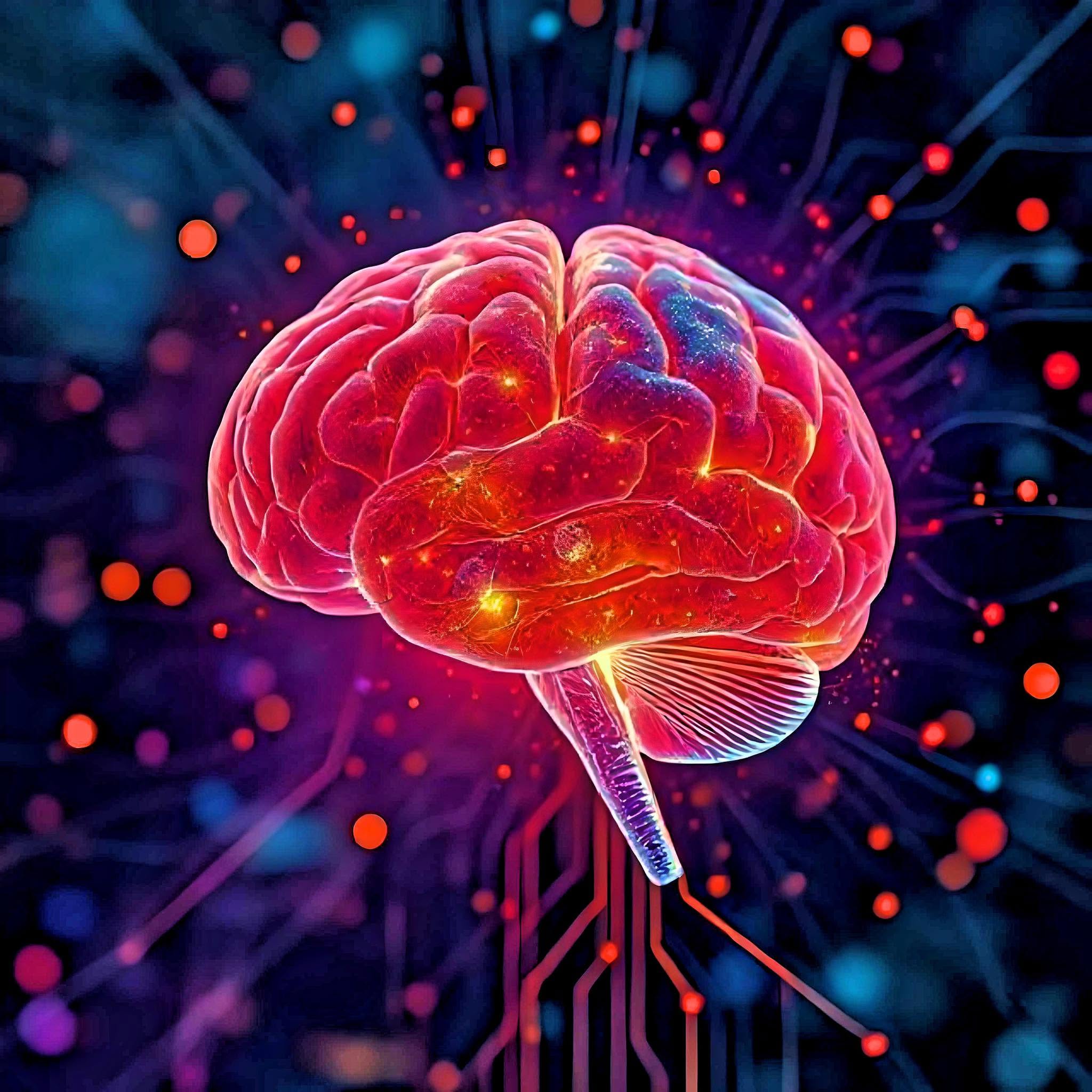
Biophysicist and mathematician Douglas Youvan has proposed a striking new hypothesis: intelligence is not a product of the brain, but a fundamental property of the universe itself. According to Youvan, the brain operates less like a generator of intelligence and more like an antenna, tuning into an “informational substrate” that underlies all of reality.
The Informational Substrate: Intelligence as a Universal Property
At the core of Youvan’s idea is the notion that information is a physical entity, comparable to energy or matter, and is woven into the very fabric of space-time. Drawing from quantum biology, information theory, and the mathematics of pattern recognition, Youvan suggests that brains don’t create intelligence from scratch. Instead, they decode and interact with signals embedded in this deeper informational field-much like how atoms assemble into molecules or galaxies form according to mathematical rules.
He describes this field as an “informational ether” or substrate, a pre-physical foundation where logic and structure exist prior to space and time. In this view, the brain’s intricate, fractal-like neural networks are naturally suited to interface with this universal intelligence, not unlike how radio receivers tune into electromagnetic waves.
Quantum Inspiration and Pattern Recognition
Youvan’s hypothesis is partly inspired by quantum theory, where outcomes are probabilistic until observed, as illustrated by Schrödinger’s cat paradox. He argues that, similarly, intelligence is not locked within neurons but accessed through them, via structures that mirror the recursive, fractal patterns found throughout nature-from neural dendrites to spiral galaxies.
Recent advances in quantum computing and pattern recognition lend some indirect support to these ideas. Quantum algorithms, for example, excel at identifying patterns within complex data structures, hinting at the possibility that the universe itself is organized around deep informational patterns that brains (and potentially AI) can access.
AI as a Fellow Explorer
Youvan extends his hypothesis to artificial intelligence, suggesting that AI systems might also “tune in” to this universal informational field. He notes that some breakthroughs in AI feel more like discoveries than inventions, as if insights are being drawn from a source just beyond human reach. In this sense, both biological and artificial minds could be seen as explorers of a shared, pre-existing landscape of intelligence.
A Controversial Idea-And Its Critics
This hypothesis challenges mainstream scientific views, which generally hold that consciousness and intelligence are emergent properties of biological evolution. Critics argue that such ideas lack empirical testability, placing them closer to metaphysics than physics. Philosopher Keith Frankish, for example, acknowledges the elegance of intelligence but maintains that evolutionary processes, not universal fields, are responsible for our cognitive abilities.
Youvan himself recognizes the speculative nature of his proposal. He has even introduced the concept of a “spiritual particle”-a theoretical entity that might bridge the gap between the physical and the conscious, with a dual nature that interacts with both matter and awareness. While this idea is untested and controversial, it reflects a growing interest among some scientists in panpsychism-the view that consciousness or intelligence could be a fundamental aspect of the universe, not just a quirk of evolution.
The Future: Testing the Hypothesis
At present, Youvan’s hypothesis remains speculative. There is no direct experimental evidence for an informational substrate or spiritual particle, and critics question whether such concepts can ever be tested by science. Yet, as neuroscience, quantum physics, and AI research continue to evolve, the idea that intelligence might be a universal property-waiting to be tapped by sufficiently complex systems-remains a provocative possibility.
“Eventually, I came to believe that intelligence is not a byproduct of the brain, but a fundamental property of the universe-a kind of informational ether that certain structures, like the brain or an AI model, can tap into.” —Douglas Youvan
Whether or not future discoveries will validate Youvan’s vision, his hypothesis invites us to reconsider the origins of intelligence and our place in a universe that may be far more interconnected-and intelligent-than we ever imagined.
(Michael de la Force, LIKE Science, LIKE Magazine, 4.28.25)
[Insert link to “The Art Of Noise feat. Max Headroom - Paranoimia [1986] HQ HD”: https://m.youtube.com/watch?v=XJdRiGkdx_0&pp=0gcJCdgAo7VqN5tD ]
https://m.youtube.com/watch?v=XJdRiGkdx_0&pp=0gcJCdgAo7VqN5tD
(Michael de la Force, LIKE® Magazine, 4.27.2025)
Source post: https://facebook.com/674873899/posts/pfbid02iRNbjbiupVsqLL1dfcqjCbKbFQCFVAxguBZNJUgCqDQyaPiiKESbq1Ps1F3PrkQtl/