Antwerp is a city where cathedral spires, container cranes, and a glowing Ferris wheel all compete for the same sky. This is not just a postcard view; it is a live diagram of how a European river town became a world port—and why entrepreneurs, families, and investors should still be paying close attention. From the revamped Royal Museum of Fine Arts to the deep tunnels under the Scheldt and the petrochemical clusters along its banks, Antwerp draws a single, continuous line between culture and commerce.
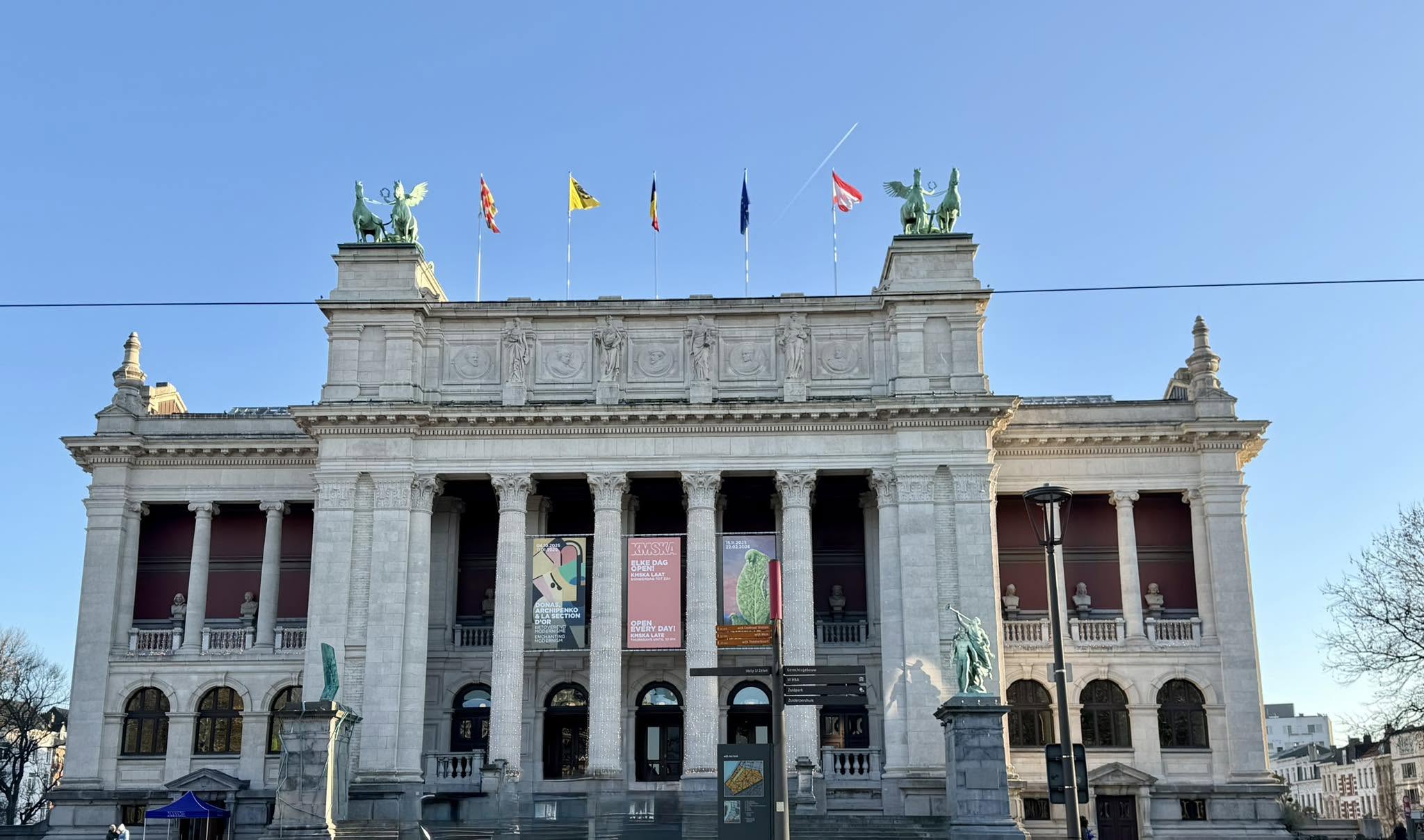
Museum light and city branding
The Royal Museum of Fine Arts Antwerp (KMSKA) reopened in 2022 after a long renovation, revealing a hybrid interior where preserved 19th‑century galleries are interwoven with stark white “boxes” that seem to float inside the original shell. This contrast between ornamented historic halls and minimalist new spaces has become a shorthand for Antwerp’s own story: a trading city that continually reinvents itself without discarding its past.
Inside, the collection ranges from Flemish Primitives and Baroque masters like Rubens and Jordaens to 19th‑century, modern, and contemporary art, placing Antwerp’s Golden Age merchants in the same narrative arc as today’s creatives. For LIKE Magazine readers, this matters because cultural institutions like KMSKA function as powerful branding engines that attract high‑spend visitors, stimulate hotel and restaurant demand, and anchor neighborhood property values.
Guild stones, crosses, and old capital
In the late Middle Ages, Antwerp’s wealth was literally woven into tapestries that depicted biblical stories, civic virtues, and episodes from city history, many of which still surface in local historical centers and former guild halls. These textiles doubled as status symbols and storytelling devices, projecting both religious identity and commercial success to visitors and trading partners.
The Butchers’ Guild, housed in the fortress‑like Vleeshuis built around 1501–1504, controlled the meat supply and wielded major political influence, with crosses and carved iconography inscribed into its late Gothic façades. Behind and above these buildings, the slender spire of the Cathedral of Our Lady—Belgium’s tallest church tower—still dominates the skyline, reinforcing a visual hierarchy in which faith, trade, and governance were knit into one urban power structure.
Wheel in the sky, port at the door
Near the Scheldt quays, a large Ferris wheel often rises during festivals or as a semi‑permanent attraction, giving panoramic views of the cathedral, river, and rows of port cranes. From its highest point, passengers can trace Antwerp’s evolution in a single rotation: medieval core at the center, 19th‑century rail and docks in a second ring, and today’s Europort‑scale infrastructure stretching toward the horizon.
For business‑minded readers, that Ferris wheel is more than funfair; it is a vertical branding tool that stitches leisure and tourism directly onto industrial vistas, turning container terminals and wharves into part of the city’s visual appeal. Such attractions support cafés, hotels, and event spaces along the waterfront, where images by photographers like Michael de la Force can frame Antwerp as both a romantic city break and a global logistics hub.
Moving people: tunnels, trams, and stories
Antwerp’s transit system is dense enough to move both workers and visitors smoothly through this layered landscape. Antwerp‑Central, often cited as one of the world’s most beautiful railway stations, connects the city by high‑frequency trains to Brussels, the rest of Belgium, and international routes, making it a practical base for cross‑border business and tourism. A mesh of trams and buses operated by De Lijn links central neighborhoods, outer districts, port zones, and park‑and‑ride facilities, ensuring that europort‑scale industry remains physically connected to residential and retail areas.
Below the river, the Sint‑Annatunnel—opened in 1933—carries cyclists and pedestrians beneath the Scheldt via tiled passages and famous wooden escalators and elevators that descend tens of meters underground, preserving an art deco character that has become technical heritage in its own right. Guided tours often highlight these machines, emphasizing how everyday infrastructure in Antwerp doubles as design history, and how sustainable mobility—bikes, pedestrian tunnels, and bridges—now sits at the center of the city’s urban narrative.
Policing a port city
Antwerp’s police service has evolved from early civic militias and night watches into a modern professional force integrated into national policing structures, responsible for safety, crowd management, and coordination around the port. Contemporary priorities include traffic control on busy access roads, community policing in diverse neighborhoods, and close cooperation with customs and federal authorities to combat organized crime linked to high‑value cargo and drug trafficking.
For investors in logistics, tourism, or hospitality, this security architecture is part of the city’s value proposition: major events, riverfront festivals around the Ferris wheel, and port‑adjacent neighborhoods can host large crowds while maintaining a reputation for order. A stable policing environment underpins insurance terms, freight reliability, and the perception of Antwerp as a safe place to live, work, and spend money.
Europort muscle and clean river ambitions
Today’s Antwerp blends heavy industry with advanced services, with key sectors including port logistics and shipping, petrochemicals and energy storage, diamonds and high‑end jewelry, fashion and design, higher education and research, and tourism and gastronomy. The unified Port of Antwerp‑Bruges ranks as Europe’s second‑largest seaport after Rotterdam, handling huge volumes of containerized goods, vehicles, and bulk cargo and hosting one of the world’s largest integrated petrochemical clusters.
Environmental efforts increasingly shape future business models: authorities are working to improve Scheldt water quality, restore tidal nature areas, and cut emissions from ships and industry through cleaner fuels, modal shifts to rail and barge, and stricter monitoring of pollutants. These policies are designed to balance europort‑scale throughput with long‑term ecological resilience, creating openings for sustainability‑oriented services such as clean‑tech solutions, circular economy projects, and river habitat restoration consultancies.
Everyday life: from docks to terraces
For residents, Antwerp is a patchwork of historic‑center streets, post‑war housing belts, and new waterfront developments that transform former docks and warehouses into apartments, offices, and cultural venues. Many households include at least one member whose work is linked directly or indirectly to the port—whether in logistics, petrochemicals, services, or public administration—while others engage in education, fashion, design, and retail.
Cafés, restaurants, and beer culture remain central to social life, with terraces stretching from medieval squares to converted docks, serving hundreds of Belgian beers, each with its own specific glass. This hospitality ecosystem taps into port‑driven tourism as well as neighborhood demand, and it creates opportunities for LIKE Magazine readers interested in boutique hotels, specialty cafés, or concept bars that draw on Antwerp’s layered maritime heritage.
Architecture of a working waterfront
Antwerp’s waterfront and skyline present a deliberate mix of historic silhouettes and contemporary landmarks anchored by the Scheldt. The Port House (Havenhuis), designed by Zaha Hadid, uses a glass “ship” form suspended above a historic base to symbolize the fusion of old harbor administration with a futuristic logistics vision, while the Museum aan de Stroom (MAS) stacks box‑like volumes reminiscent of piled containers overlooking former docks.
Contemporary planning favors sculptural silhouettes visible from promenades and ships, so cylindrical towers and curved riverfront buildings appear alongside refurbished silos and warehouses. These forms, together with the Ferris wheel’s rotating geometry, create a strong visual identity that can be leveraged by investors in waterfront offices, residential projects, and cultural venues seeking a recognizable, photogenic backdrop for brands and events.
From medieval trade to modern opportunity
Antwerp’s documented port history dates to the 12th century, when it handled traffic to England and Zeeland and served as a wine port for Rhine and Moselle cargo. The 16th century “Golden Age” saw Antwerp become one of Europe’s richest cities, trading metals, spices, textiles, sugar, and colonial goods while pioneering sophisticated financial instruments such as early stock trading, bills of exchange, and insurance services.
The city declined after 1585 when the Scheldt was effectively closed by the Dutch, but it revived in the 19th century, especially after Belgium bought out Dutch toll rights in 1863, enabling free sea access and triggering a second boom powered by new docks, rail links, and industrial growth. Napoleon’s earlier investments in docks like the Bonaparte Dock laid part of the groundwork for this transformation, proving how state‑backed infrastructure can permanently reshape urban fortunes.
How Antwerp has made money
Historically, Antwerp families and firms earned wealth through merchant trading in cloth, metals, spices, sugar, and colonial goods via Scheldt shipping lanes, as well as financial services and manufacturing such as breweries, sugar refineries, and tapestry workshops. Over time, diamond cutting and trading turned the city into a premier global diamond center, while art, printing, and luxury crafts—anchored by painters like Rubens and Jordaens—added cultural capital to economic capital.
In the 20th century, livelihoods diversified into port work (dockers, logistics, customs), industrial jobs in chemicals and metals, and services like warehousing, trucking, and ship agency. Tourism, fashion, design, and gastronomy now generate additional income streams, especially in the historic center and redeveloped docklands such as the Eilandje district, where cultural venues and hospitality businesses share streets with port‑related offices.
How you can make money in Antwerp today
For LIKE Magazine readers, modern Antwerp offers a portfolio of entry points into its europort economy. Logistics and trade remain foundational, with opportunities in freight forwarding, warehousing, customs brokerage, and last‑mile distribution tied to the Port of Antwerp‑Bruges. Chemically intensive clusters and energy storage facilities require engineering, maintenance, safety, and environmental services, creating demand for specialized SMEs and consultants.
On the visitor‑facing side, tourism and hospitality—hotels, furnished apartments, cafés, breweries, tour companies, and event venues—benefit from steady flows of cruise passengers, business travelers, and art tourists visiting sites like KMSKA, MAS, and the cathedral. Creative and advertising work for breweries, cafés, galleries, and niche brands links visual storytelling to the city’s mural culture and historic beer advertising traditions, while sustainability services aligned with Scheldt clean‑up and decarbonization initiatives represent a growing frontier. Families often combine a stable job in port or services with side ventures in real estate or short‑term rentals aimed at port workers and tourists, blending security with entrepreneurial upside.
Why Antwerp matters now
Antwerp grew from a medieval river port into a top‑tier European maritime hub, and that story is still unfolding in real time. Today, the city’s selling point lies in its unique mix: global-scale logistics capacity, high cultural density, robust hospitality traditions, and visible environmental ambition, all framed by a skyline where a Ferris wheel, a Gothic cathedral, and a glass ship‑like tower coexist.
For travelers, this means a city where a tram ride can take you from a Rubens altarpiece to a rooftop view over container stacks, then down through an art deco tunnel to a riverside bar. For investors and entrepreneurs, it means a marketplace where heavy trade and intimate neighborhood businesses still plug into the same shared urban story—and where the next turn of the wheel might be yours to ride.
[© LIKE MAGAZINE 2026 | Images by Michael de la Force]
(Michael de la Force, LIKE® Magazine, 1.5.2026)
Source post: https://facebook.com/674873899/posts/pfbid02Mpwc12BpF41r9DYngyoHwbLREeRGoaxpjkJ8MvSH9H6dfKuG6vTS6x7FXMQ2kwwSl/