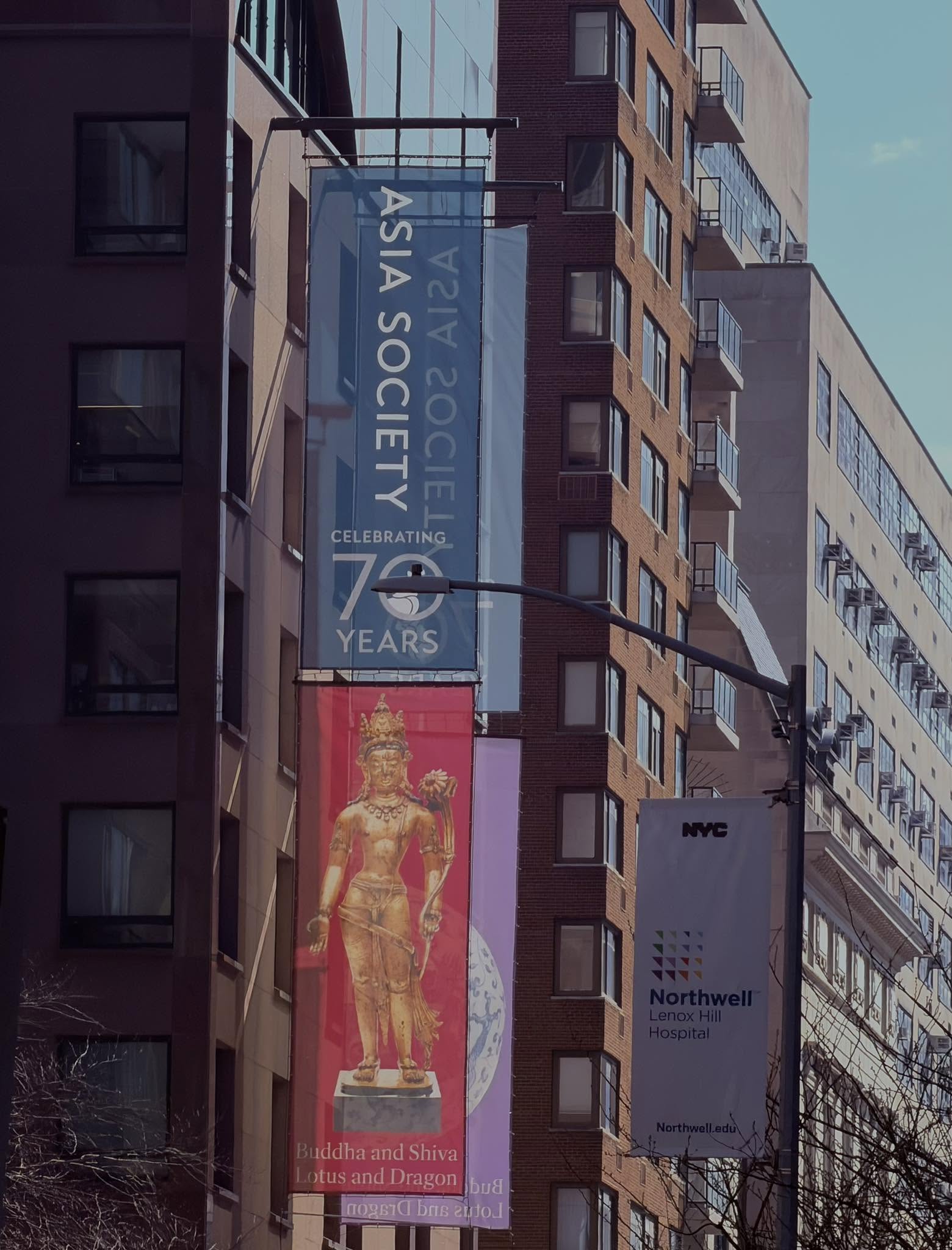
On a bright March morning on Park Avenue, as Michael de la Force’s lens captures the light falling across the marble and glass of Asia Society’s New York headquarters, the institution itself is also in the spotlight. Founded in 1956 by philanthropist John D. Rockefeller 3rd, Asia Society celebrates seventy years this year—a milestone for an organization dedicated from day one to building understanding between Asia and the United States through art, ideas, and diplomacy. It is a story of conversations in hushed galleries and crowded auditoriums, of visionary leaders and tireless diplomats, and increasingly, of a nuanced, evolving engagement with China that now finds fresh resonance in the forthcoming visit of President Xi Jinping and Madame Peng Liyuan to Washington, D.C.
A vision born in New York
When Rockefeller established Asia Society in New York in 1956, the world was emerging from the shadows of war into a new, uncertain global order. He saw that the United States’ understanding of Asia—its cultures, histories, and political realities—was limited, often reduced to headlines. His answer was not a think tank alone, nor a museum alone, but a hybrid institution: a place where art exhibitions could sit alongside policy forums, and where business leaders might leave a lecture on trade and walk straight into a gallery of classical Chinese bronzes or contemporary ink painting.
From its Park Avenue home, Asia Society began mounting exhibitions that introduced American audiences to masterpieces of Asian art, hosting dialogues on development and security, and creating platforms where Asians could speak for themselves rather than be spoken about. Over seven decades, this approach—patient, curious, and outward‑looking—has turned a Manhattan initiative into a global network with centers from Hong Kong and Shanghai to Mumbai and Sydney, all echoing Rockefeller’s founding goal of “building bridges of understanding between Asia and the United States.”
Seventy years of engaging China
China has always stood at the heart of Asia Society’s mission, both as an ancient civilization and as a modern power reshaping global politics and economics. In the early decades, the organization helped introduce American audiences to Chinese art and thought, turning attention from geopolitics alone toward the country’s intellectual and cultural depth. As China opened up and re‑entered the global economy, Asia Society’s programs followed that transformation, offering some of the earliest nuanced public conversations in New York and beyond about reform, modernization, and the new realities of U.S.–China interdependence.
This focus deepened with the creation of the Center on U.S.–China Relations, designed explicitly to “seek new ways of building mutual understanding between the United States and China.” The Center has explored areas of common interest and divergent views across policy, culture, business, media, economics, energy, and the environment, curating projects that invite both candor and empathy. In an era when headlines can swing from rivalry to cooperation in a single news cycle, Asia Society has consistently held space for serious, balanced dialogue—bringing together Chinese and American scholars, officials, entrepreneurs, and artists to talk, listen, and sometimes disagree, but always with respect.
Diplomats, leaders, and the practice of sustainability
Asia Society’s history is also a tapestry of diplomats and leaders who have lent their time, reputations, and ideas to the institution’s work. Across its global centers, former ambassadors, foreign ministers, and senior envoys from Asia and the United States have used its stages to explain national perspectives, react to shifting policies, and, often, to make the case for cooperation even in difficult times. In Northern California, for example, Asia Society has convened consuls general from China, Japan, India, and South Korea to exchange views on U.S. policies and regional priorities, modeling how frank yet friendly diplomatic dialogue can unfold in public.
Over time, Asia Society’s understanding of “sustainability” has grown well beyond the environmental realm. Programs on climate, energy, and the green transition have been joined by conversations about sustainable economies, social inclusion, and resilient civic ties between the United States and Asia. In many of these efforts, Chinese and American voices meet on equal footing—scientists tackling air pollution, city leaders comparing climate adaptation strategies, business figures exploring responsible investment—extending the definition of sustainability to include the durability of relationships between peoples and nations.
A new chapter: President Xi and Madame Peng in Washington
Against this seventy‑year backdrop, the forthcoming visit of President Xi Jinping and Madame Peng Liyuan to Washington, D.C., takes on a special symbolic weight. It comes at a moment when U.S.–China relations are as complex as they are consequential, with the two countries intertwined economically and environmentally while navigating differences on security, technology, and human rights. Asia Society’s long practice of presenting both American and Chinese perspectives—in New York, Beijing, Washington, and beyond—helps frame such a visit not as an isolated spectacle, but as part of a longer story of engagement that stretches back decades and forward into the shared future.
High‑level summits are always dense with protocol and policy, but they are also stages on which culture and image quietly speak. When President Xi meets American leaders in Washington, the cameras will capture handshake and backdrop, but the subtler narrative is about whether the two sides can renew a habit of listening to each other. Asia Society’s work over seventy years—building sustained channels of exchange on everything from trade to theater—offers a kind of soft architecture for that possibility: a reminder that beyond communiqués and press conferences, relationships endure when institutions and citizens keep talking.
Madame Peng Liyuan: Style, soft power, and the global gaze
At the center of that softer narrative stands Madame Peng Liyuan. Long before she became China’s first lady, Peng was one of the country’s most celebrated soprano singers, a star of the People’s Liberation Army’s performing arts troupe and a familiar face on national television. When Xi Jinping assumed the presidency, Peng stepped onto the global stage with a poise that instantly drew comparisons to other style‑defining first ladies around the world, her public image carefully composed yet unmistakably warm.
Peng’s fashion choices have become a language of their own: structured coats in pale blues and soft creams, tailored suits that nod to both Chinese and Western silhouettes, accessories that quietly reference traditional motifs without feeling nostalgic. She is often described as elegant and modern, blending an almost architectural clarity of line with an evident comfort in her own skin, whether greeting schoolchildren abroad or standing beside world leaders at major summits. For an audience attuned to visual storytelling—such as readers of LIKE Magazine—her appearance in Washington will be watched as closely as any joint statement.
Yet Peng’s presence is not only sartorial. On the global stage she has championed causes like education, public health, and poverty alleviation, serving as a World Health Organization (WHO) goodwill ambassador and supporting initiatives on tuberculosis and HIV/AIDS. In this role she stands at the intersection of image and policy, using her cultural charisma and personal prestige to give a human face to China’s engagement with the world. In a sense, she performs a function similar to that of Asia Society itself: translating between worlds, softening edges, and showing that beneath the abstractions of geopolitics are individuals, families, and shared aspirations.
“China Doll” and the art of cultural reflection
It is no accident that this article is linked to David Bowie’s “China Girl,” a song whose history is entangled with Western projections and fantasies about China and Asia more broadly. While Bowie’s track is often read as a critique of Western exoticism and power, the title’s evocative “China doll” image also reminds us how easily Asia can be flattened into a decorative object in the Western imagination. For seventy years, Asia Society has been working in precisely the opposite direction: replacing the fragile, silent figurine with living, speaking, self‑defining voices from across the continent.
In that sense, the forthcoming Xi–Peng visit to Washington and the anniversary of Asia Society converge around a single question: can we move beyond stylized images—whether a pop song’s “China doll” or a stock photo of a summit handshake—toward a more textured understanding of each other? Asia Society’s galleries of Chinese contemporary art, its panels on film and literature, its policy briefings on everything from fintech to climate—all of these are attempts to complicate the picture, to replace caricature with character.
Park Avenue, Washington, Beijing: A three‑way conversation
In Michael de la Force’s photograph, the Asia Society New York building on Park Avenue is both a place and a metaphor. It is a physical space where New Yorkers and visitors encounter Asia, but it is also a vantage point from which to watch the choreography of U.S.–China relations unfold—whether in Beijing, Washington, or far beyond. Inside, exhibitions might trace centuries of Chinese artistic innovation even as, upstairs, a panel of former ambassadors dissects the latest turn in bilateral ties, and down the hall, young professionals from both countries exchange ideas over coffee.
As the institution turns seventy, it is fitting that attention swings toward China once again, this time through the graceful figure of Madame Peng and the high stakes of her husband’s Washington visit. The story is no longer simply of an American foundation “studying” Asia, but of a genuinely two‑way engagement in which Chinese voices help shape the conversation, and in which cultural style can be as revealing as any policy paper. In that evolving story, Asia Society stands as a steady bridge, and Peng Liyuan, with her poised public image and record of cultural achievement, walks that bridge in full view of the world.
For readers of LIKE Magazine, attuned to aesthetics as much as ideas, this confluence of institution, image, and diplomacy is a moment to savor. Seventy years after John D. Rockefeller 3rd imagined a place where Americans could encounter Asia in all its richness, a Chinese first lady renowned for her exquisite style will step onto American soil once more, carrying with her not only the weight of geopolitics but also the possibility of renewed cultural connection. Between Park Avenue and Pennsylvania Avenue, between gallery and grand reception, the bridge that Asia Society has patiently built still stands—inviting both sides to cross.
(Insert link to David Bowie, China Girl:
https://m.youtube.com/watch?v=_YC3sTbAPcU ]
https://m.youtube.com/watch?v=_YC3sTbAPcU
(Michael de la Force, LIKE® Magazine, 3.26.2026)
Source post: https://facebook.com/674873899/posts/pfbid0F8UzGb8jJRfMTdrsz5wT4qPgLJAs2oRWYMmC85eK5t45jp2pATuNw3m3BeA6eeCWl/