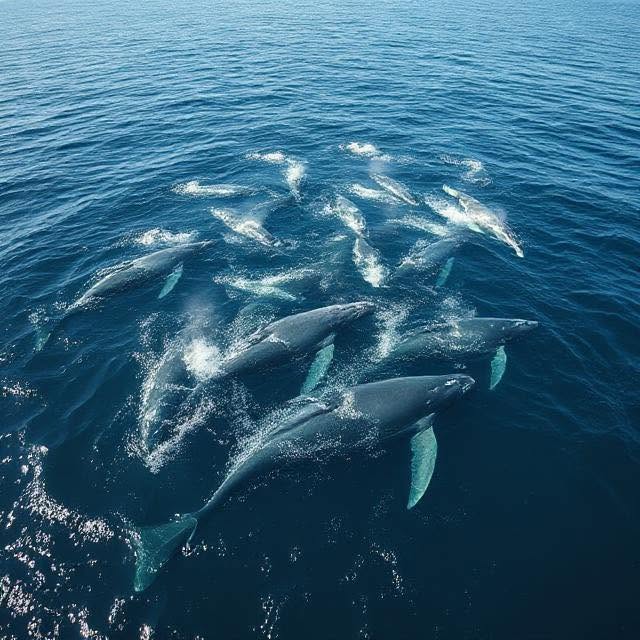
Humpback whales, typically solitary animals, have recently been observed forming unusually large groups—sometimes up to 200 individuals—off the coast of South African National Parks. This behavior is unexpected, as these whales usually migrate to tropical waters to breed and feed in Antarctic waters during this season. Scientists have documented these gatherings, but the reasons remain unclear, with some experts suggesting changes in prey availability or environmental conditions may be factors.
A useful comparison can be made with the behavior of cows in the Midwest United States when storms approach. Cows, like whales, exhibit distinct group behaviors in response to environmental stress. According to observations and agricultural sources, cows tend to gather tightly together in fields as a storm approaches, even when there is plenty of space available. This huddling behavior is believed to provide comfort and protection, reducing individual stress and vulnerability. The Old Farmers Almanac supports this, stating, “If cows huddle, a bad storm is approaching”. Furthermore, research indicates that isolation is particularly stressful for cattle, increasing the likelihood of injury and panic.
Scientists at the University of Minnesota Extension note that during severe winter weather, cattle will seek shelter and prioritize getting out of the wind, often grouping together or seeking windbreaks to reduce exposure and maintain body temperature. This behavior is not just about physical protection; studies show that community and proximity help reduce stress in cattle, making them less susceptible to harm.
(Michael de la Force, LIKE Magazine, 5.26.2025)
[Insert link to Alice in Chains “Whale & Wasp”: https://m.youtube.com/watch?v=1VvvPGXQ1RM ]
https://m.youtube.com/watch?v=1VvvPGXQ1RM
(Michael de la Force, LIKE® Magazine, 5.26.2025)
Source post: https://facebook.com/674873899/posts/pfbid0EFbESuneqnZLHV96vGKqHusTTpHWqjAvtJzukKtPYXmT52XfPQgrtuSZLciWmBNrl/