“Life is a dance more than it is an assertion and there is more health in dynamism or fluidity than there is rigidity and stasis” —Oli Anderson (from his book Personal Revolutions: A Short Course in Realness)
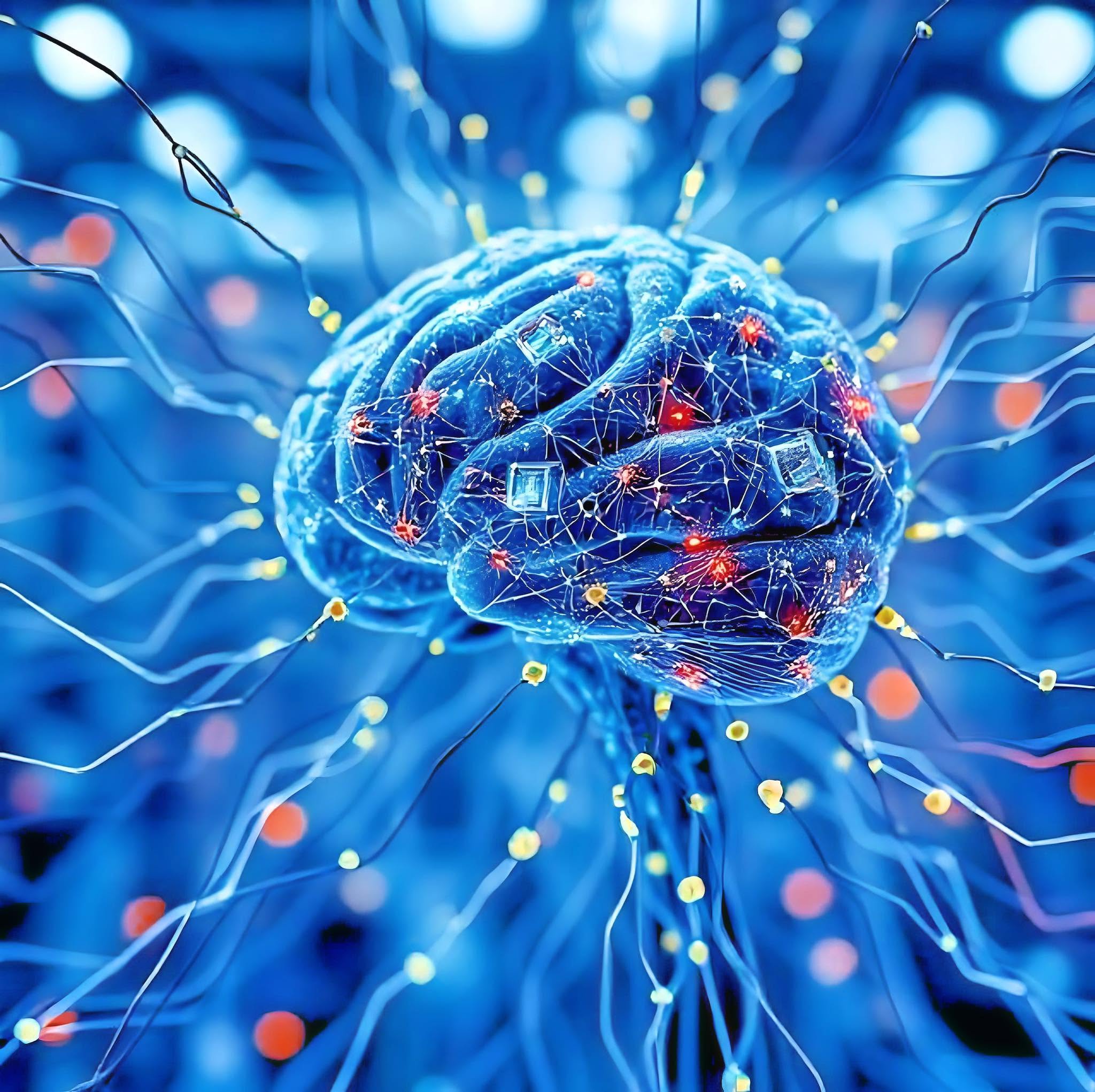
A new era of artificial intelligence is emerging from German research labs, where scientists have engineered a groundbreaking class of neural networks that behave more like living brains than traditional machines. These “liquid” AI systems can dynamically rewire their internal code and behavior while running—an unprecedented leap in machine learning that promises to revolutionize robotics, autonomous vehicles, and beyond.
THE SCIENCE BEHIND LIQUID NEURAL NETWORKS
Unlike conventional neural networks, which are defined by static layers and fixed weights, liquid neural networks (LNNs) are built on mathematical frameworks that allow each node to adapt its behavior based on previous states, memories, and incoming data. This architecture draws inspiration from the plasticity of biological brains, where neurons continuously reshape their connections in response to experience.
Dr. Ramin Hasani, a leading scientist at Massachusetts Institute of Technology (MIT) and co-founder of Liquid AI, describes the approach: “In a traditional neural network, each simulated neuron's characteristics are determined by a fixed value or 'weight.' In contrast, a liquid neural network's neuron behavior is dictated by an equation that forecasts its activity over time, with the network solving a series of interconnected equations as it operates. This structure enhances the network's efficiency and adaptability, allowing it to continue learning even after its initial training, a feature not found in conventional neural networks”.
FROM THEORY TO PRACTICE: ADAPTIVE MACHINES IN THE REAL WORLD
The transformative power of liquid AI has already been demonstrated in a series of experiments. In one study, MIT researchers replaced a traditional deep neural network—comprising tens of thousands of neurons—with a liquid network of just 90 neurons to control a self-driving car. The liquid network focused on the road horizon and edges, mimicking human attention and enabling the vehicle to adapt instantly to changing conditions.
Another experiment involved autonomous drones navigating a forest. When trained on summer imagery, only the liquid network could reliably locate red objects as the seasons changed and the environment transformed. Competing models failed when the background shifted to autumn or winter, but the liquid AI dynamically reconfigured itself to maintain accuracy.
A HISTORY OF INNOVATION: BUILDING TOWARD LIQUID AI
The roots of liquid neural networks trace back to recurrent neural networks (RNNs), which introduced the concept of memory and time-dependent processing to machine learning. However, RNNs and their successors, like LSTMs, still relied on fixed architectures. The leap to liquid networks came from the realization that real intelligence requires continuous, context-driven adaptation—mirroring how living brains process time series data and learn from experience.
Inspired by the nervous system of the microscopic worm C. elegans, which exhibits complex behavior with just a few hundred neurons, Hasani and colleagues designed neural architectures where each node is governed by a dynamical system rather than a static function. This approach enables the network to reshape itself in milliseconds, responding to new data, feedback, or errors in real time.
SELF-REFLECTIVE LEARNING: BEYOND PROGRAMMED RESPONSES
Perhaps most remarkable is the system’s emergent self-reflective learning. Liquid AI doesn’t just adapt to external data streams; it learns from its own mistakes, optimizing future responses and evolving its internal structure accordingly. This mirrors instinctual learning and decision-making in biological organisms, moving machine intelligence closer to organic cognition.
“These flexible algorithms, dubbed ‘liquid’ networks, change their underlying equations to continuously adapt to new data inputs. The advance could aid decision making based on data streams that change over time, including those involved in medical diagnosis and autonomous driving.”
— MIT News, 2021
APPLICATIONS AND FUTURE IMPACT
The potential applications for liquid AI are vast:
Robotics: Robots equipped with liquid networks can adapt to new environments or tasks on the fly, making them more resilient and autonomous.
Autonomous Vehicles: Cars and drones can instantly adjust to unpredictable weather, obstacles, or traffic conditions, improving safety and reliability.
Finance and Bioengineering: Liquid AI models can analyze complex, evolving data streams, from financial transactions to genetic information.
Natural Language Processing: Early results suggest that liquid-based language models can outperform much larger conventional models, offering efficiency and interpretability.
THE ROAD AHEAD
Liquid neural networks represent a paradigm shift in artificial intelligence research. By enabling machines to reprogram themselves organically, these systems blur the line between code and cognition, opening the door to truly autonomous, continuously evolving machines. As Dr. Daniela Rus, a pioneer in the field, notes, “It looks like these liquid networks learn the task rather than the context of the task. We are now working to mathematically characterize this”.
As liquid AI matures, it may become the foundation for a new generation of intelligent systems—ones that don’t just follow code, but evolve their own intelligence in real time, much like the living brains that inspired them.
(Michael de la Force, LIKE® Magazine, 6.27.2025)
Source post: https://facebook.com/674873899/posts/pfbid0zySVSUVpYiiCQR9wEYRrX7yEAbXGfEWAzoVGMH1pyW7XPp8dnbCsjzWmdWid8kpil/