The “Lucy” poems are a cluster of five short elegiac lyrics by William Wordsworth, written between 1798 and 1801, that quietly revolve around a young woman named Lucy. Though brief, they stand together as a haunting sequence about love, solitude, and the sorrow of early death. Wordsworth never fully explained who Lucy was—she may have been inspired by a real person, a composite of memories, or a purely imagined figure—but readers and critics later grouped these poems under the label “the Lucy poems” because the name Lucy appears in their titles or refrains and because they share a similar mood and narrative thread.
Over time, the name “Lucy poems” stuck as a way to refer to this intimate cycle of verses, allowing readers to experience them not just as isolated lyrics but as a unified meditation on a woman whose life is glimpsed through understated images of nature, seclusion, and quiet burial. In this LIKE Magazine feature, we walk through all five poems, pairing each with a brief summary and a lucid explanation of how Wordsworth uses simplicity and restraint to make loss feel both intimate and universal.
Following are the Lucy poems:
1. Strange fits of passion have I known
Summary:
This opening “Lucy” poem sets a gently eerie, dreamlike mood. The speaker describes riding toward Lucy’s cottage at night, watching the moon sink behind her cottage roof, and confessing that in that strange, “fitful” moment he feels a unsettling thought: “If she should die!” The poem blends romantic longing with a quiet fear of loss, as though love and death are already intertwined in the speaker’s imagination.
Poem:
Strange fits of passion have I known:
And I will dare to tell,
But in the lover’s ear alone,
What once to me befell.
When she I loved looked every day
Fresh as a rose in June,
I to her cottage bent my way,
Beneath an evening‑moon.
Upon the moon I fixed my eye,
All over the wide lea;
With quickening pace my horse drew nigh
Those paths so dear to me.
And now we reached the orchard‑plot;
And, as we climbed the hill,
The sinking moon to Lucy’s cot
Came near and nearer still.
In one of those sweet dreams I slept,
Kind Nature’s gentlest boon!
And all the night my body kept
A still and quiet tune:
No习惯了 (pattern) of the mind oppressed
The mingled sense of sight and sound;
And my dear Moon, in all her pride,
I seemed to them, although I was not, proud.
For all the night, methought, had I
That cottage under view;
And to the moon did I not say,
“Poor Lucy! when I die,
She’ll weep, as I do now” — but then
I thought, “If Lucy should be dead!”
2. She dwelt among the untrodden LIKE MAGAZINE EXPLORES WORDSWORTH’S LUCY POEMS – THE SECRET SONGS OF LOVE AND LOSS
The “Lucy” poems are a cluster of five short elegiac lyrics by William Wordsworth, written between 1798 and 1801, that quietly revolve around a young woman named Lucy. Though brief, they stand together as a haunting sequence about love, solitude, and the sorrow of early death. Wordsworth never fully explained who Lucy was—she may have been inspired by a real person, a composite of memories, or a purely imagined figure—but readers and critics later grouped these poems under the label “the Lucy poems” because the name Lucy appears in their titles or refrains and because they share a similar mood and narrative thread.
Over time, the name “Lucy poems” stuck as a way to refer to this intimate cycle of verses, allowing readers to experience them not just as isolated lyrics but as a unified meditation on a woman whose life is glimpsed through understated images of nature, seclusion, and quiet burial. In this LIKE Magazine feature, we walk through all five poems, pairing each with a brief summary and a lucid explanation of how Wordsworth uses simplicity and restraint to make loss feel both intimate and universal.
Following are the Lucy poems:
1. Strange fits of passion have I known
Summary:
This opening “Lucy” poem sets a gently eerie, dreamlike mood. The speaker describes riding toward Lucy’s cottage at night, watching the moon sink behind her cottage roof, and confessing that in that strange, “fitful” moment he feels a unsettling thought: “If she should die!” The poem blends romantic longing with a quiet fear of loss, as though love and death are already intertwined in the speaker’s imagination.
Poem:
Strange fits of passion have I known:
And I will dare to tell,
But in the lover’s ear alone,
What once to me befell.
When she I loved looked every day
Fresh as a rose in June,
I to her cottage bent my way,
Beneath an evening‑moon.
Upon the moon I fixed my eye,
All over the wide lea;
With quickening pace my horse drew nigh
Those paths so dear to me.
And now we reached the orchard‑plot;
And, as we climbed the hill,
The sinking moon to Lucy’s cot
Came near and nearer still.
In one of those sweet dreams I slept,
Kind Nature’s gentlest boon!
And all the night my body kept
A still and quiet tune:
No习惯了 (pattern) of the mind oppressed
The mingled sense of sight and sound;
And my dear Moon, in all her pride,
I seemed to them, although I was not, proud.
For all the night, methought, had I
That cottage under view;
And to the moon did I not say,
“Poor Lucy! when I die,
She’ll weep, as I do now” — but then
I thought, “If Lucy should be dead!”
(Note: modern clean typesettings usually modernize spelling and trim the last line’s repetition; the core image of the moon and the “If Lucy should die!” thought remains.)
2. She dwelt among the untrodden ways
Summary:
This short elegy portrays Lucy as a hidden, almost secret beauty, living far from public notice. She is compared to a modest violet and a solitary star, images that stress how quietly, and how unnoticed, she lived and died. The poem’s power lies in its simplicity: the speaker knew and mourns her, but the wider world never did, making her loss feel both private and profound.
Poem:
She dwelt among the untrodden ways
Beside the springs of Dove,
A maid whom there were none to praise
And very few to love:
A violet by a mossy stone
Half hidden from the eye!
—Fair as a star, when only one
Is shining in the sky.
She lived unknown, and few could know
When Lucy ceased to be;
But she is in her grave, and, oh,
The difference to me!
3. I travelled among unknown men
Summary:
Here the speaker links Lucy to the English landscape: his love for his country and his love for her grew at the same time, while he was away from both. The poem implies that her death is a wound that deepens his attachment to England, as if her memory is woven into the land itself. The tone is calmer and more reflective than the earlier lyrics, blending patriotism with personal grief.
Poem:
I travelled among unknown men,
In lands beyond the sea;
Nor, England! did I know till then
What love I bore to thee.
’Tis past, that melancholy dream!
Nor will I quit thy shore
A second time; for still I seem
To love thee more and more.
Among thy mountains did I feel
The joy of my desire;
And there, O Bafford Hills, I still
Delight in their green fire.
Yet often, in my heart, would rise
The memory of what once had been;
Of Lucy, who in youth’s fair prime
Had faded like a star unseen.
And if the deep blue sky
Were all her dwelling‑place,
My heart would careless be of joy
In that forsaken face.
But now that Lucy’s grave is found
On the green hill‑side near,
I feel that I am England’s son,
And Lucy’s love, and will not fear.
4. Three years she grew in sun and shower
Summary:
In this poem, “Nature” speaks, explaining that Lucy will grow beautiful for three years under sun and rain, then be taken as a flower is plucked from the earth. The imagery suggests that Lucy is not merely a person but a part of the natural world, whose life and death are governed by natural law. The tone is tender and solemn, as if Nature and man both love her.
Poem:
Three years she grew in sun and shower,
Then Nature said, “A lovelier flower
On earth was never sown;
This child I to myself will take;
She shall be mine, and I will make
A lady of my own.
“Myself will to my darling be
Both law and impulse: and with me
The girl, in rock and plain,
In earth and heaven, in glade and bower,
Shall feel an overseeing power
To kindle or restrain.
“She shall be sportive as the fawn
That wild with glee across the lawn
Or up the mountain springs;
And hers shall be the breathing balm,
And hers the silence and the calm
Of mute, insensate things.
“The floating clouds their state shall lend
To her; for her the willow bend;
Nor shall she fail to see
E’en in the motions of the storm
Grace that shall mould the maiden’s form
By silent sympathy.
“The stars of midnight shall be dear
To her; and she shall lean her ear
In many a secret place
Where rivulets dance their wayward round,
And beauty born of murmuring sound
Shall pass into her face.
“And vital feelings of delight
Shall rear her form to stately height,
Her virgin bosom swell;
Such thoughts to Lucy I will give
While she and I together live
Here in this happy dell.”
Thus Nature spake—The work was done—
How soon my Lucy’s race was run!
She died, and left to me
This heath, this calm, and quiet scene;
The memory of what has been,
And nevermore will be.
5. A slumber did my spirit seal
Summary:
The briefest and most haunting of the Lucy poems, this lyric describes Lucy as having passed into a deep, timeless rest. The speaker admits that before her death he felt untouched by the passage of time; now she belongs to the larger, unfeeling motion of the earth. The poem suggests that she is no longer subject to human anxieties or changes, but fully merged with the natural world.
Poem:
A slumber did my spirit seal;
I had no human fears:
She seemed a thing that could not feel
The touch of earthly years.
No motion has she now, no force;
She neither hears nor sees;
Rolled round in earth’s diurnal course,
With rocks and stones and trees.
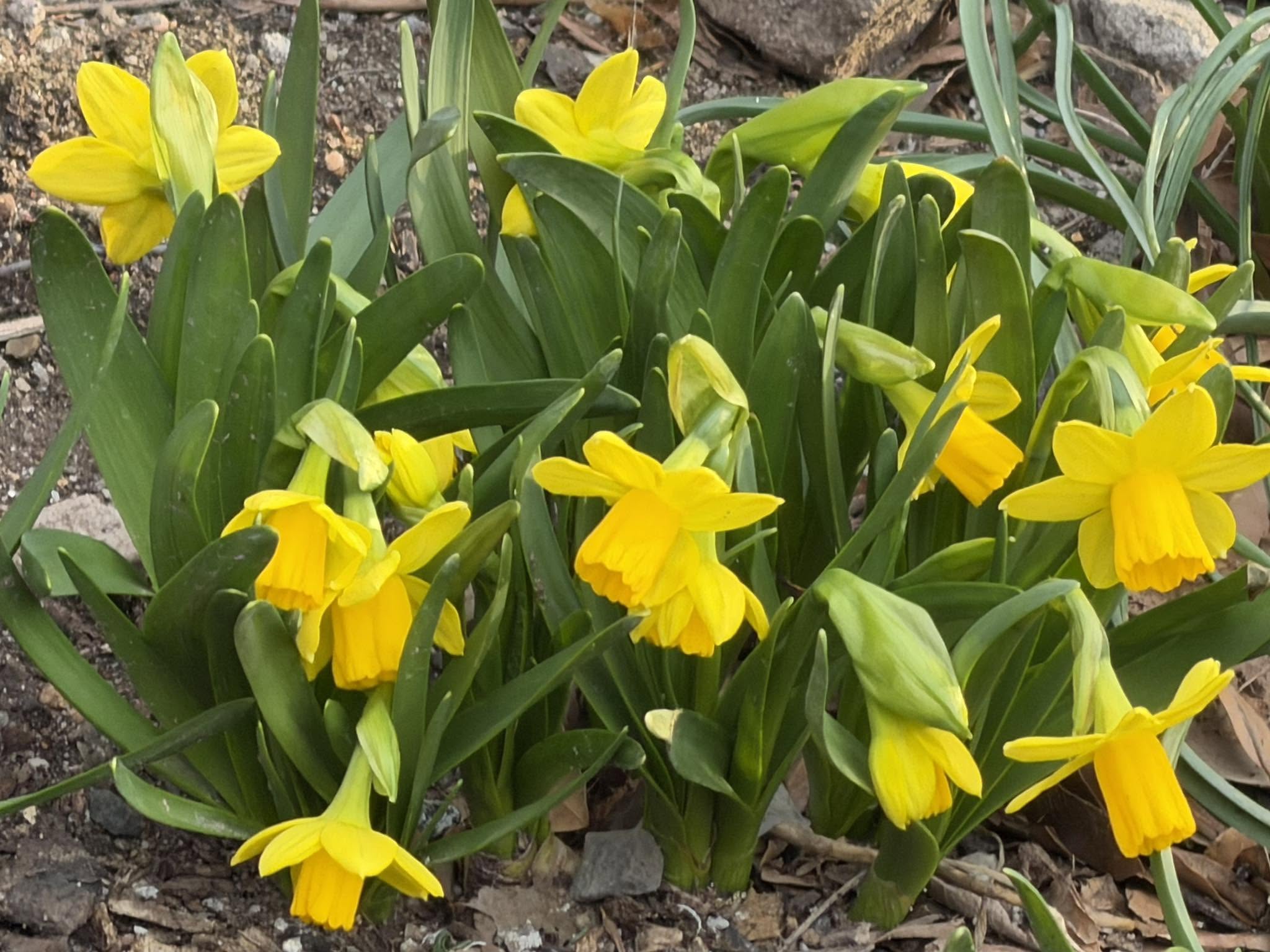
(Photographer: Michael de la Force, 3.30.2026)
Summary:
This short elegy portrays Lucy as a hidden, almost secret beauty, living far from public notice. She is compared to a modest violet and a solitary star, images that stress how quietly, and how unnoticed, she lived and died. The poem’s power lies in its simplicity: the speaker knew and mourns her, but the wider world never did, making her loss feel both private and profound.
Poem:
She dwelt among the untrodden ways
Beside the springs of Dove,
A maid whom there were none to praise
And very few to love:
A violet by a mossy stone
Half hidden from the eye!
—Fair as a star, when only one
Is shining in the sky.
She lived unknown, and few could know
When Lucy ceased to be;
But she is in her grave, and, oh,
The difference to me!
3. I travelled among unknown men
Summary:
Here the speaker links Lucy to the English landscape: his love for his country and his love for her grew at the same time, while he was away from both. The poem implies that her death is a wound that deepens his attachment to England, as if her memory is woven into the land itself. The tone is calmer and more reflective than the earlier lyrics, blending patriotism with personal grief.
Poem:
I travelled among unknown men,
In lands beyond the sea;
Nor, England! did I know till then
What love I bore to thee.
’Tis past, that melancholy dream!
Nor will I quit thy shore
A second time; for still I seem
To love thee more and more.
Among thy mountains did I feel
The joy of my desire;
And there, O Bafford Hills, I still
Delight in their green fire.
Yet often, in my heart, would rise
The memory of what once had been;
Of Lucy, who in youth’s fair prime
Had faded like a star unseen.
And if the deep blue sky
Were all her dwelling‑place,
My heart would careless be of joy
In that forsaken face.
But now that Lucy’s grave is found
On the green hill‑side near,
I feel that I am England’s son,
And Lucy’s love, and will not fear.
4. Three years she grew in sun and shower
Summary:
In this poem, “Nature” speaks, explaining that Lucy will grow beautiful for three years under sun and rain, then be taken as a flower is plucked from the earth. The imagery suggests that Lucy is not merely a person but a part of the natural world, whose life and death are governed by natural law. The tone is tender and solemn, as if Nature and man both love her.
Poem:
Three years she grew in sun and shower,
Then Nature said, “A lovelier flower
On earth was never sown;
This child I to myself will take;
She shall be mine, and I will make
A lady of my own.
“Myself will to my darling be
Both law and impulse: and with me
The girl, in rock and plain,
In earth and heaven, in glade and bower,
Shall feel an overseeing power
To kindle or restrain.
“She shall be sportive as the fawn
That wild with glee across the lawn
Or up the mountain springs;
And hers shall be the breathing balm,
And hers the silence and the calm
Of mute, insensate things.
“The floating clouds their state shall lend
To her; for her the willow bend;
Nor shall she fail to see
E’en in the motions of the storm
Grace that shall mould the maiden’s form
By silent sympathy.
“The stars of midnight shall be dear
To her; and she shall lean her ear
In many a secret place
Where rivulets dance their wayward round,
And beauty born of murmuring sound
Shall pass into her face.
“And vital feelings of delight
Shall rear her form to stately height,
Her virgin bosom swell;
Such thoughts to Lucy I will give
While she and I together live
Here in this happy dell.”
Thus Nature spake—The work was done—
How soon my Lucy’s race was run!
She died, and left to me
This heath, this calm, and quiet scene;
The memory of what has been,
And nevermore will be.
5. A slumber did my spirit seal
Summary:
The briefest and most haunting of the Lucy poems, this lyric describes Lucy as having passed into a deep, timeless rest. The speaker admits that before her death he felt untouched by the passage of time; now she belongs to the larger, unfeeling motion of the earth. The poem suggests that she is no longer subject to human anxieties or changes, but fully merged with the natural world.
Poem:
A slumber did my spirit seal;
I had no human fears:
She seemed a thing that could not feel
The touch of earthly years.
No motion has she now, no force;
She neither hears nor sees;
Rolled round in earth’s diurnal course,
With rocks and stones and trees.
(Photographer: Michael de la Force, 3.30.2026)
(Michael de la Force, LIKE® Magazine, 3.30.2026)
Source post: https://facebook.com/674873899/posts/pfbid02AHhiB5AuCBAY25zX8fNkuRoRUV5mrNEwcb6z3WDjzQLwP4Sdv5DdyodtYzeST9p6l/