“Throughout the search process, we heard time and again of Ian’s openness, his commitment to active listening, and his willingness to grapple with multiple truths and conflicting ideas. Ian embraces complexity—a critical quality for a global philanthropy navigating the cascading environmental, political, social, economic, and technological challenges of the 21st century.”
—Janai Nelson, RBF Trustee,
President and Director-Counsel, Legal Defense Fund
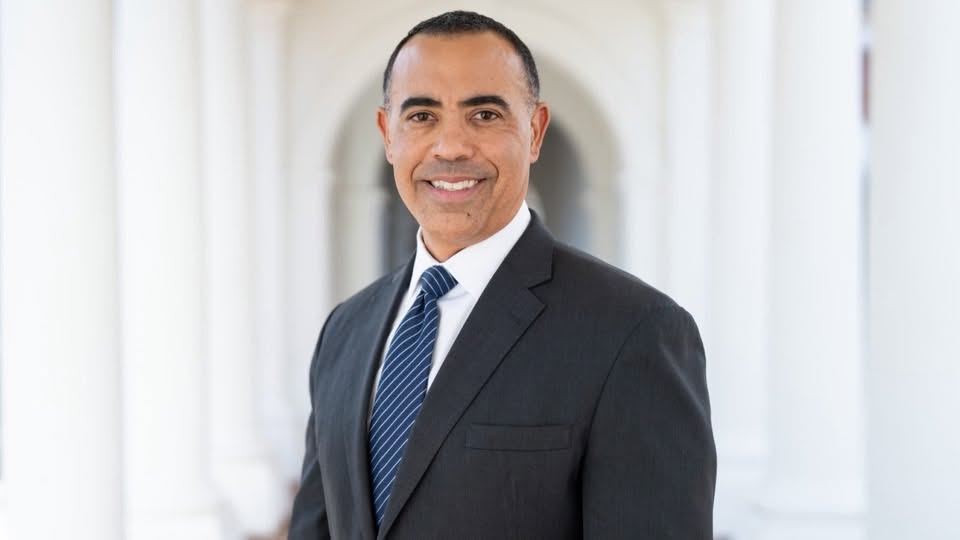
In an era defined by rising geopolitical tension and renewed nuclear uncertainty, the appointment of Ian H. Solomon as president and CEO of the Rockefeller Brothers Fund arrives with unusual weight. More than a leadership transition, it signals a continued—and potentially expanded—role for quiet diplomacy at a time when official negotiations between nations are often constrained by politics, mistrust, or outright hostility.
Solomon, a New York City native with deep roots in public policy and global negotiation, will assume leadership of the 85-year-old foundation in September 2026. He succeeds Stephen Heintz, whose 25-year tenure elevated the Fund into a discreet but influential player in international affairs—particularly in nuclear diplomacy, where progress often depends on conversations that happen far from public view.
To understand the Fund’s role in nuclear diplomacy is to look closely at one of the most complex diplomatic breakthroughs of the 21st century: the 2015 Iran Nuclear Deal, formally known as the Joint Comprehensive Plan of Action (JCPOA). The agreement placed strict limits on Iran’s nuclear program—reducing uranium enrichment levels, cutting centrifuge numbers, and subjecting facilities to international inspections—in exchange for relief from economic sanctions. Its goal was straightforward but urgent: to extend the time it would take Iran to develop a nuclear weapon and, in doing so, reduce the risk of conflict in an already volatile region.
What is less widely understood is how such agreements take shape long before formal negotiations begin. In the years leading up to the JCPOA, direct talks between the United States and Iran were politically sensitive and, at times, impossible. This is where Track II diplomacy emerged as a critical tool.
Track II diplomacy refers to informal, unofficial dialogue between non-governmental actors—former diplomats, policy experts, academics, and technical specialists—who can engage more freely than sitting government officials. Without the pressure of public scrutiny or political posturing, these participants are able to test ideas, clarify technical misunderstandings, and explore potential compromises. In the case of Iran, Track II discussions helped both sides better understand the practical limits and verification mechanisms of a nuclear agreement, building a foundation of trust and technical consensus that formal negotiators could later draw upon.
The Rockefeller Brothers Fund played a meaningful role in supporting and convening these dialogues. By funding meetings, facilitating exchanges, and maintaining neutral spaces for sustained conversation, the Fund helped ensure that communication between U.S. and Iranian stakeholders did not collapse entirely during periods of official deadlock. These efforts did not replace government negotiations—but they made them possible.
Stephen Heintz described this strategy as “acupuncture philanthropy,” a philosophy rooted in precision: small, carefully targeted interventions designed to unlock broader systemic change. In nuclear diplomacy, that might mean supporting a single convening of experts that leads to a breakthrough in how uranium enrichment is monitored, or enabling backchannel conversations that reduce the risk of miscalculation between adversaries.
Solomon’s career suggests a natural alignment with this approach. As dean of the University of Virginia’s Frank Batten School of Leadership and Public Policy, he has emphasized interdisciplinary problem-solving across global challenges, many of which intersect with security and diplomacy. His leadership during moments of crisis—from the COVID-19 pandemic to campus tragedy—has demonstrated an ability to guide institutions through complexity with clarity and empathy.
Earlier in his career, Solomon served as legislative counsel to then-Senator Barack Obama, worked on international economic policy at the U.S. Treasury, and was unanimously confirmed as U.S. executive director at the World Bank Group. In that role, he negotiated agreements involving multiple countries and stakeholders on issues such as food security and development finance—experience that mirrors the layered, high-stakes nature of nuclear negotiations.
Just as critical is his background in conflict resolution. Through his international consulting work, Solomon advised governments and institutions on negotiation strategies and collaborative problem-solving. These skills are central to nuclear diplomacy, where success often hinges not on formal authority, but on the ability to sustain dialogue across deep political divides.
The Rockefeller Brothers Fund’s broader work reinforces this interconnected vision. Its early move to divest from fossil fuels helped catalyze a global shift in how institutions approach climate responsibility, while its investments in democratic institutions aim to strengthen the governance structures that underpin international stability. Nuclear risk, after all, does not exist in isolation—it is shaped by political trust, economic pressure, and the resilience of global systems.
Solomon steps into leadership at a moment when nuclear diplomacy is once again under strain. Agreements have frayed, new technologies have complicated verification, and geopolitical rivalries have intensified. In this environment, the kind of sustained, unofficial engagement that defines Track II diplomacy is not peripheral—it is essential.
“I am honored by this opportunity,” Solomon said in accepting the role, pointing to the Fund’s enduring commitment to a more just, sustainable, and peaceful world. That vision increasingly depends on the ability to manage existential risks with patience, precision, and persistence.
If the Rockefeller Brothers Fund has demonstrated anything, it is that diplomacy does not always begin at the negotiating table. Often, it starts in quieter settings—among experts, across divides, and through conversations that gradually make agreement possible. With Ian Solomon at the helm, that work continues, shaping the future of nuclear diplomacy in ways that may never fully be seen, but will be deeply felt.
(Michael de la Force, LIKE® Magazine, 6.30.2026)
Source post: https://facebook.com/674873899/posts/pfbid0BLkc4pcBRbRG8o3mSz56H9dwt9r6um5PNm6piX9765gTRFtWN1Fayd3kdLP7hHTtl/