Norwegian researchers at SINTEF Ocean have launched a transformative energy storage device: an underwater battery powered solely by saltwater, designed for continuous, safe operation in the world’s oceans. The battery leverages aluminum and carbon-based electrodes suspended in a seawater electrolyte, producing electric current when deployed, and requires no protective casing or complex safety systems. The moment it touches the ocean, it becomes operational—a marked contrast to conventional batteries that demand hazardous containment due to the risks of explosion and toxicity.
How This Battery Stacks Up vs. Comparable Technologies
Conventional lithium-ion batteries dominate grid storage and electric vehicles, requiring rare earth elements such as lithium, cobalt, and nickel. These resources are geographically concentrated (China refines 60% of lithium, 80% of cobalt), creating global supply chain vulnerabilities and environmental concerns with mining and disposal. In contrast, Norway’s saltwater battery uses aluminum and seawater, two of Earth’s most abundant materials, and is recyclable, sidestepping supply chain and toxicity issues prevalent in established chemistries.
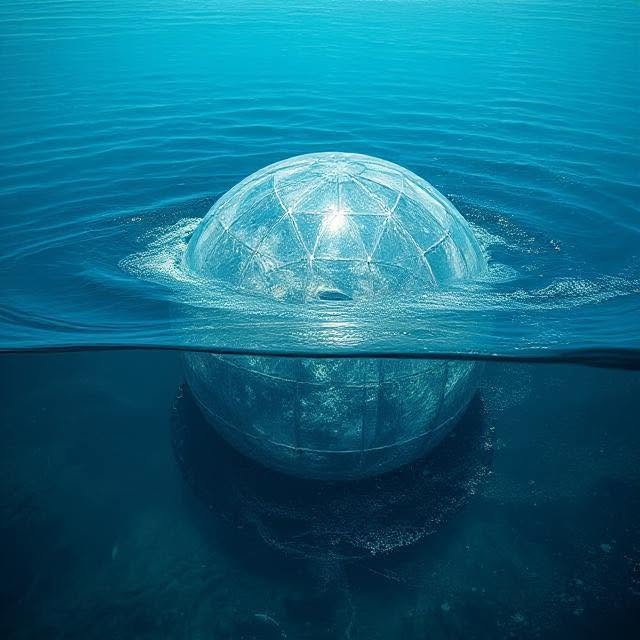
Underwater pumped-storage systems are another contender in the marine energy space. German researchers have demonstrated deep-sea installations using vast hollow concrete spheres anchored on the seabed: surplus electricity pumps water out of the spheres, and when energy is needed, water flows back in to drive a turbine. These systems achieve up to 80–90% efficiency and store large amounts of energy for grids or offshore wind farms. However, their scale, infrastructure needs, and long-term maintenance are substantial compared to the elegant simplicity of SINTEF’s saltwater battery.
Global Battery Tech Giants
The biggest players worldwide in battery technology include:
CATL (Contemporary Amperex Technology Co. Limited), China — the world’s largest EV battery manufacturer.
LG Chem/LG Energy Solution (South Korea)
Panasonic (Japan)
Tesla and QuantumScape (USA)
BYD (China)
These companies focus on lithium-ion and solid-state battery development, grid storage, and electric mobility. China controls over 75% of global cell fabrication for advanced batteries.
Europe, with landmark R&D funding ($3.5 billion EU initiative), has targeted strategic leadership in next-generation batteries emphasizing recyclable, sustainable chemistries. The US Department of Energy encourages innovation toward batteries with reduced critical mineral requirements and profitable recovery of spent materials.
Revolutionary Applications Beyond Marine Sensors
While autonomous sensors, drones, and underwater vehicles are the obvious beneficiaries, SINTEF’s saltwater battery’s robust, instant-activation profile suits several novel contexts:
Water Desalination: Offshore desalination plants could use these batteries for emergency backup or autonomous operation of monitoring and dosing equipment, given their resilience to contaminated or saline conditions.
Underground and Submarine Cables: The emerging trend of laying vast underwater cables to transfer power or data demands reliable, distributed energy sources for sensor networks, redundancy systems, and maintenance robotics. Saltwater batteries, which activate on contact, could power sensor arrays embedded along cable routes for real-time monitoring without environmental hazard.
Emergency Flotation and Rescue Devices: Batteries that activate on saltwater contact guarantee instant power for location beacons and inflatable rescue devices, vital for maritime safety operations.
Scientific Validation and Future Prospects
The technology’s safety, environmental neutrality, and durability stem from its avoidance of hazardous chemicals and failure to degrade under extreme pressure, cold, or contamination. Modular, scalable designs could pivot from lightweight field sensors to supporting large marine infrastructure—with major global research organizations validating underwater battery concepts (e.g., SINTEF, FFI, German physicists with pumped storage spheres).
The saltwater battery’s capacity to operate wherever seawater is present, untethered by complex logistics and rare materials, may redefine autonomous ocean tech—enabling more ambitious exploration, resilient sensor grids, and trustworthy backup for underwater cable networks worldwide. In comparison to the current global players’ focus on high-density rechargeable systems, Norway’s approach exemplifies a vital shift toward sustainable, disposable, and operationally versatile marine power, ideally suited for the next era of ocean infrastructure.
(Michael de la Force, LIKE® Magazine, 8.8.2025)
Source post: https://facebook.com/674873899/posts/pfbid0FfcENMEVtQEn6JX9TznozhPDnETGA9EHb7Ye5nbZxLg87HJwxjKJAgVCRRQvrsBUl/