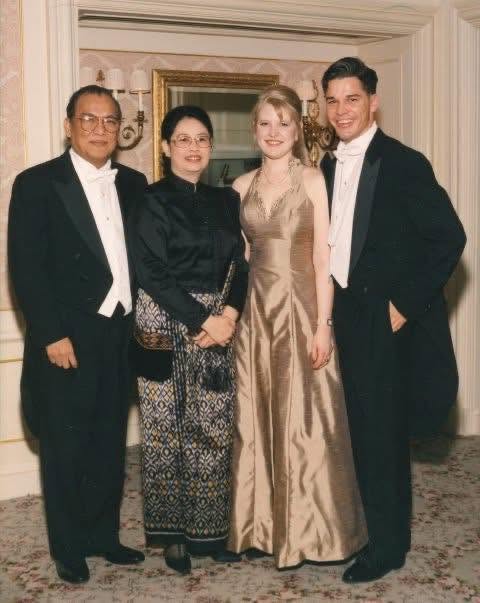
(New York, Jan. 22, 2026) — High above Fifth Avenue, the rooftop of The St. Regis New York still feels like a private perch over Manhattan, where century-old stories of debutante balls, society bands and legendary cocktails linger in the air. Attached to today’s throwback photograph — with LIKE Magazine editor Michael de la Force on the far right — the space reads as timeless, but the hotel below it is as current and polished as ever, from its refreshed public spaces to its modern bars and restaurants.
Astor’s sky-high palace
The St. Regis New York opened in 1904 as John Jacob Astor IV’s answer to what a truly modern palace hotel should be, marrying European formality with American innovation. Designed in the French Beaux-Arts style by Trowbridge & Livingston, with richly appointed interiors, it quickly became the epicenter of Manhattan’s “Astor 400” social set.
The original 18‑story building, then among the tallest hotels in New York, was built with fireproof construction, telephones in every room, and private baths long before such comforts were standard.
Its limestone façade, elaborate balconies, carved garlands and copper-framed windows were meant to evoke a Parisian grand hotel rising straight from Fifth Avenue.
Inside, Astor’s team layered Italian marble, bronze, chandeliers and gold-leaf details across the public rooms, creating a setting where social rituals, from afternoon tea to all-night dances, could unfold beneath ceiling frescoes and crystal.
How the rooftop came to life
For all of Astor’s early opulence, the hotel did not originally have a rooftop garden; that came with a major expansion in the late 1920s. Under the ownership of Benjamin Newton Duke, an eastern annex was added on East 55th Street in 1927, extending the building and creating a new roof level dedicated to parties in the sky.
A roof garden designed by Joseph Urban opened atop the annex in 1928, introducing open-air dining and dancing with city views that made summer nights at the St. Regis a status event.
In 1936 the space was reimagined as a Viennese-style roof garden, complete with a ballroom in pink, gold and gray, and even a dance floor with an ice-skating platform beneath it — a theatrical flourish that suited pre-war New York’s taste for spectacle.
By the mid-20th century, the St. Regis Roof — often paired with spaces like Salle Cathay — became synonymous with glamorous charity balls, society weddings and corporate fêtes where bands played past midnight while the city glittered below.
Music, balls and peach Bellinis
On that rooftop and in adjoining salons, dance bands became as much a part of the hotel’s identity as its chandeliers. Orchestras and society bands, including the kind of high-energy ensembles exemplified by leaders such as Lester Lanin, turned St. Regis parties into whirlwinds of confetti, specialty cocktails and packed dance floors, creating the template for the classic New York “hotel ball.”
Black-tie balls often paired live swing or big-band sets with themed menus, towering floral displays and dessert courses served just as the band picked up tempo again.
Signature drinks, including sparkling fruit-based cocktails like peach-forward Bellinis and Champagne concoctions, underscored the hotel’s reputation for European-style indulgence in an American setting.
Though fashions changed — from tailcoats and tiaras to sleek modern gowns and slim black suits — the ritual of dressing up, riding the elevator skyward and stepping into a rooftop ballroom remained a constant thread through generations of New York celebrations.
Restaurants, chefs and a bar called Old King Cole
The St. Regis has long served as both a stage and a training ground for culinary talent, pairing ambitious menus with the city’s social life. Over the decades, its restaurants and supper clubs have included intimate rooms like La Boite Russe, a Russian-inspired venue, and the Maisonette, a late-night supper club famous for its sophisticated menu and headlining entertainers.
La Boite Russe offered specialties of Russian cuisine, while the Maisonette drew celebrities, statesmen and world figures for dinner and dancing after theater hours.
Contemporary fine-dining concepts, including acclaimed chef-driven rooms such as Adour in the 21st century, continued the tradition of using the hotel as a platform for serious cuisine and rising-star chefs.
At the heart of the hotel’s liquid history is the King Cole Bar, home to Maxfield Parrish’s famous “Old King Cole” mural, installed at the St. Regis in 1932 after being moved from the Racquet and Tennis Club. In 1934, bartender Fernand Petiot introduced a cocktail he called the “Red Snapper,” the hotel’s refined version of the tomato-and-vodka drink that would become globally known as the Bloody Mary.
The King Cole Bar remains one of New York’s most atmospheric hotel bars, with the glowing Parrish mural presiding over martinis, Red Snappers and pre-theater cocktails for guests and locals alike.
Renovations announced in 2024 and completed around the hotel’s 120th year have refreshed the bar and adjoining public areas, balancing brighter, contemporary finishes with respect for the original artwork and proportions.
Today’s bar and restaurant lineup — from the restored King Cole Bar to new dining venues introduced in its recent revamp — continues to draw a mix of international travelers, Midtown executives and New Yorkers who treat the hotel as their living room between meetings, galleries and shows.
Famous guests, columnists and legends
Over more than a century, the St. Regis has attracted a parade of luminaries, many of whom wove the rooftop and bar into their personal mythologies. Artists such as Salvador Dalí, who famously stayed at the hotel for extended periods, as well as screen icons like Marilyn Monroe and sports legends such as Joe DiMaggio, have been linked with stays, parties or appearances that helped solidify the property’s cultural cachet.
Columnists and chroniclers of New York society life — from mid-century gossip writers to contemporary luxury and travel journalists — have repeatedly singled out the St. Regis for its combination of architectural drama, service culture and social history.
Articles and essays over decades have framed the hotel’s roof and ballrooms as backdrops for diplomatic meetings, film-industry celebrations, fashion events and charity galas, reinforcing its role as a barometer of Manhattan style.
With the LIKE Magazine photograph presenting today’s rooftop as a nostalgic tableau — city light in the background — the image neatly bridges past and present: the same skyline, the same sense that something memorable is about to happen as music starts up and glasses of Champagne or peach cocktails are raised.
Honors, ownership and today’s hours
Now part of Marriott International’s St. Regis brand, the New York original has retained its position at the top tier of global hospitality rankings. The hotel holds prestigious distinctions including membership in Leading Hotels of the World in its history, Forbes Five-Star status and AAA Five Diamond recognition, underscoring its reputation for meticulous service and refined rooms.
A major renovation program carried through 2024 and 2025 has updated the lobby, King Cole Bar and dining spaces, while preserving the Beaux-Arts architecture and the signature mansard roofline that still crowns Fifth Avenue.
Current bar and restaurant hours, seasonal rooftop events, and special experiences — from brunches to evening live music — shift throughout the year, so guests typically check the hotel’s latest listings or concierge recommendations before heading upstairs.
For all the upgrades in lighting, sound and mixology, the essential experience on the St. Regis rooftop remains unchanged: a feeling that New York’s history and its present are stacked atop one another like floors in the same tower, with the city glittering just beyond the balustrade and another story waiting to be told in the next photograph.
(Michael de la Force, LIKE® Magazine, 1.22.2026)
Source post: https://facebook.com/674873899/posts/pfbid02bxg1LFEAasdwTzpynfSomhd5m7dLeyuwYviNLeAEJML3vjs1Hiqfruce7in25JWul/