Asia's Premier Security Summit: IISS Asia Security Summit: Shangri-La Dialogue®
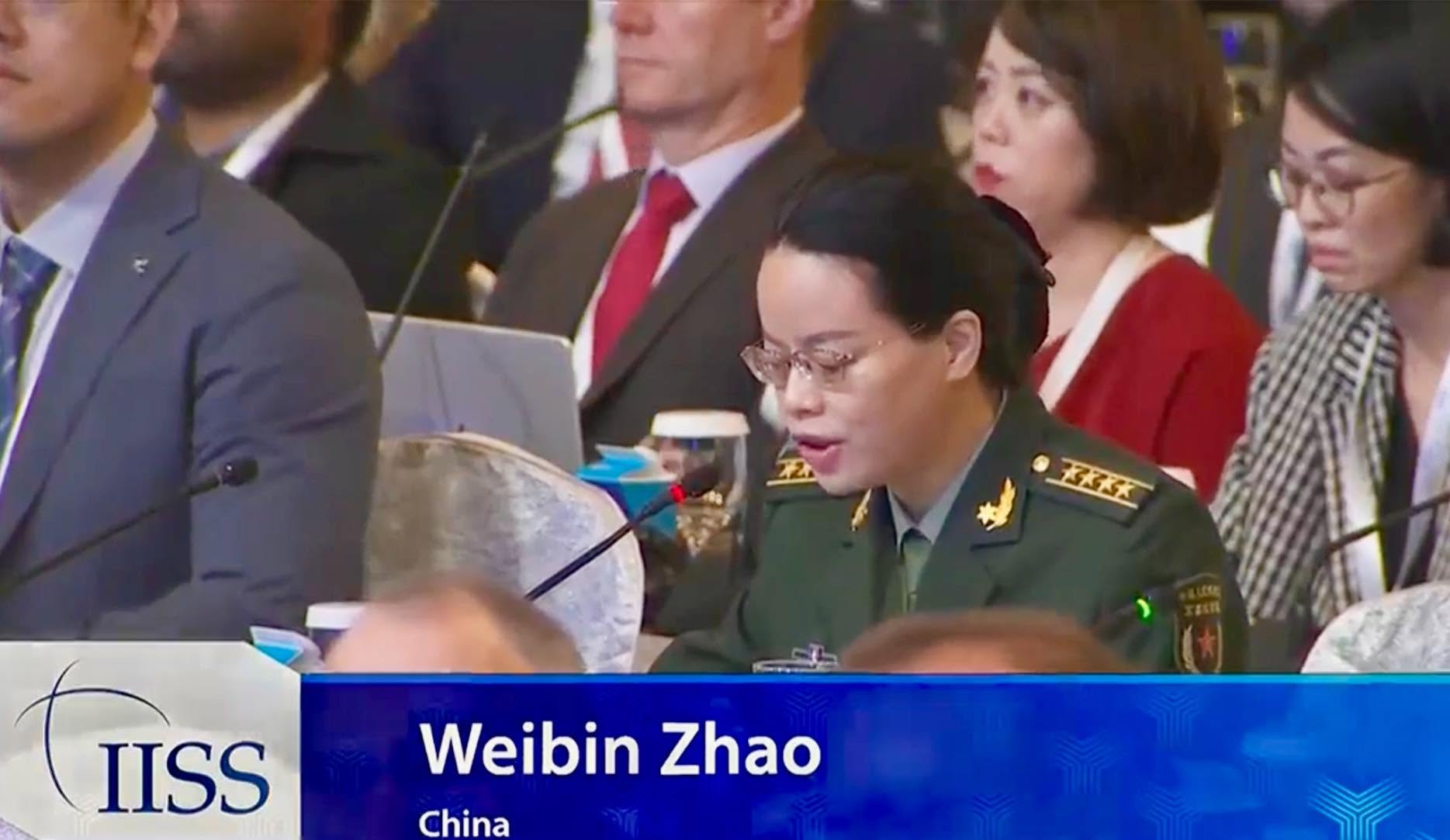
Asia's top security summit opened today in Singapore against a backdrop of mounting geopolitical tensions and questions about U.S. priorities in the region. The 23rd Shangri-La Dialogue® runs from May 29-31, 2026, bringing together defence leaders, military chiefs, and security experts from around the world.
The summit brings together representatives from 44 countries, including 54 ministerial-level delegates and more than 42 chief of defence forces and senior defence officials from across the Asia-Pacific and Europe. While primarily an inter-governmental meeting, the summit is also attended by legislators, academic experts, distinguished journalists, and business delegates. The forum commonly draws defence ministers, permanent heads of ministries, and military chiefs of mostly Asia-Pacific states.
The Honorable Pete Hegseth serves as United States Secretary of War. He was sworn in on January 25, 2025, as the 29th Secretary of Defense before the department's name was changed to War.
At this year's summit, Hegseth asserted the U.S. is not "turning our backs" on Asia while fulfilling global obligations. He urged Asian partners to allocate 3.5% of GDP for defense spending and commended Korea, Australia, and the Philippines for augmenting military budgets. Hegseth acknowledged China's military buildup but adopted a gentler tone than last year, avoiding calling Beijing an "imminent threat" and emphasizing seeking "a genuinely stable equilibrium" rather than "unnecessary confrontation".
In attempting to have partners partake in their full share of defense costs, even New Zealand questioned whether they themselves were considered to be a “freeloader".
Association of Southeast Asian Nations (ASEAN) defence chiefs emphasized individual agency at the dialogue, asserting that Southeast Asian nations are not "mere pawns" in great power rivalry. Representatives from Cambodia, Indonesia, Malaysia, the Philippines, Thailand, Singapore, and Vietnam have taken up speaking engagements in previous years. Philippine Secretary of National Defence Gilberto Teodoro Jr. asserted his country was not a "mere pawn with no strategic agency" despite being a U.S. treaty ally. As a prominent player in Southeast Asia, Indonesia plays a pivotal role in the Shangri-La Dialogue®, with its president-elect meeting Ukrainian President Zelenskyy during the 2024 summit.
The Shangri-La Dialogue was established in 2002 by Sir John Chipman, current IISS Director-General and Chief Executive, who conceived the idea in 2001 when he noticed Asian officials receiving "short shrift" at the Munich Conference on Security Policy. Initially modelled after the Munich Conference but with greater ambition, it was created as a "Track One" organization where defence ministers could meet multilaterally in a transregional format. Singapore was chosen as the location, with the Shangri-La Hotel as the venue, where it has been held continuously since 2002.
The conference is known for its hard-driving tone. For example, at the 2010 IISS Asia Security Summit: Shangri-La Dialogue®, public confrontations broke out between U.S. and Chinese officials, making the summit especially notable. An example of the debate nature of the symposium includes when U.S. Defense Secretary Robert M. Gates publicly clashed with Chinese Major General Zhu Chenghu over North Korea policy, and the next day General Ma Xiaotian criticized the United States in his speech. This is often remembered as a moment when the forum’s normally diplomatic tone gave way to unusually open disagreement, especially between the U.S. and China.
The 23rd IISS Shangri-La Dialogue® tackles the biggest current concerns in defence and security, pulling in ministers, generals, diplomats, and arms industry representatives. The meeting brings together defence ministers, military chiefs, and security strategists from over 40 countries to debate the Indo-Pacific's most pressing security challenges. This year's edition is organized by the International Institute for Strategic Studies (IISS), which opened its Asia office in 2004 to organize the summit independently.
The SLD provides a valuable platform for the exchange of perspectives on defence and security issues and initiatives, facilitating opportunities for like-minded countries to come together and cooperate to address new challenges. Over the years, the Shangri-La Dialogue® has become one of the most important independent forums for the exchange of views by international security policy decision-makers. Prior to the first summit, Asia lacked a regional security framework like Europe's, making this forum essential for building confidence and fostering practical security cooperation. Singapore's geopolitical neutrality and advanced infrastructure make it an ideal venue for fostering high-level international discussions.
The forum serves a useful purpose of getting Asia-Pacific leaders to talk to each other and establish personal links that could be necessary in averting crises, even as the region's arms buildup and tensions continue.
By region, the closest leader-level security summits and forums to IISS Asia Security Summit: Shangri-La Dialogue® are:
Asia-Pacific
ASEAN Summit and related leader meetings. These are the most direct regional counterpart, bringing together heads of state and government to address security, political, and strategic issues.
East Asia Summit. This is a leaders’ forum that regularly covers regional security and great-power competition.
APEC Leaders’ Meeting. It is mainly economic, but security and regional stability often come up.
Pacific Islands Forum Leaders’ Meeting. It is a leader-level regional forum where security and resilience issues are often discussed.
ASEAN Regional Forum ministerial meetings are not leader-level, but they sit close to this tier in the Asia-Pacific security architecture.
Europe
NATO Summit. This is the clearest leader-level security summit in Europe, bringing together heads of state and government from the alliance.
European Council meetings. These are not purely security summits, but EU leaders regularly address defense, sanctions, and regional security.
Munich Security Conference is not a leader summit by design, but it is one of the highest-profile European security gatherings and often includes presidents and prime ministers.
Global
G20 Summit. This is broader than security, but it is one of the few gatherings where many major leaders meet in one place and discuss strategic stability.
United Nations General Assembly high-level week. Not a security summit, but it is a major leader-level diplomatic forum where security crises are often addressed.
CSIS Asia Pacific Conferences. These are high-level but more issue-focused meetings.
“The summit is what drives us, but the climb itself is what matters." — Conrad Anker (prolific and influential alpinist)
(LIKE Magazine, May 30, 2026)
(Michael de la Force, LIKE® Magazine, 5.30.2026)
Source post: https://facebook.com/674873899/posts/pfbid0yXMAgRMMhqwjaeoMAkg4x7bJcPErJwMuHYStRu1SphBPbpQteBeCwfDxH1UkqdaPl/