A journey through the timeless soul of two of the world’s most fabled hotels—where luxury, history, and human stories unfold beneath chandeliers, gilt cornices, and the quiet choreography of impeccable service.
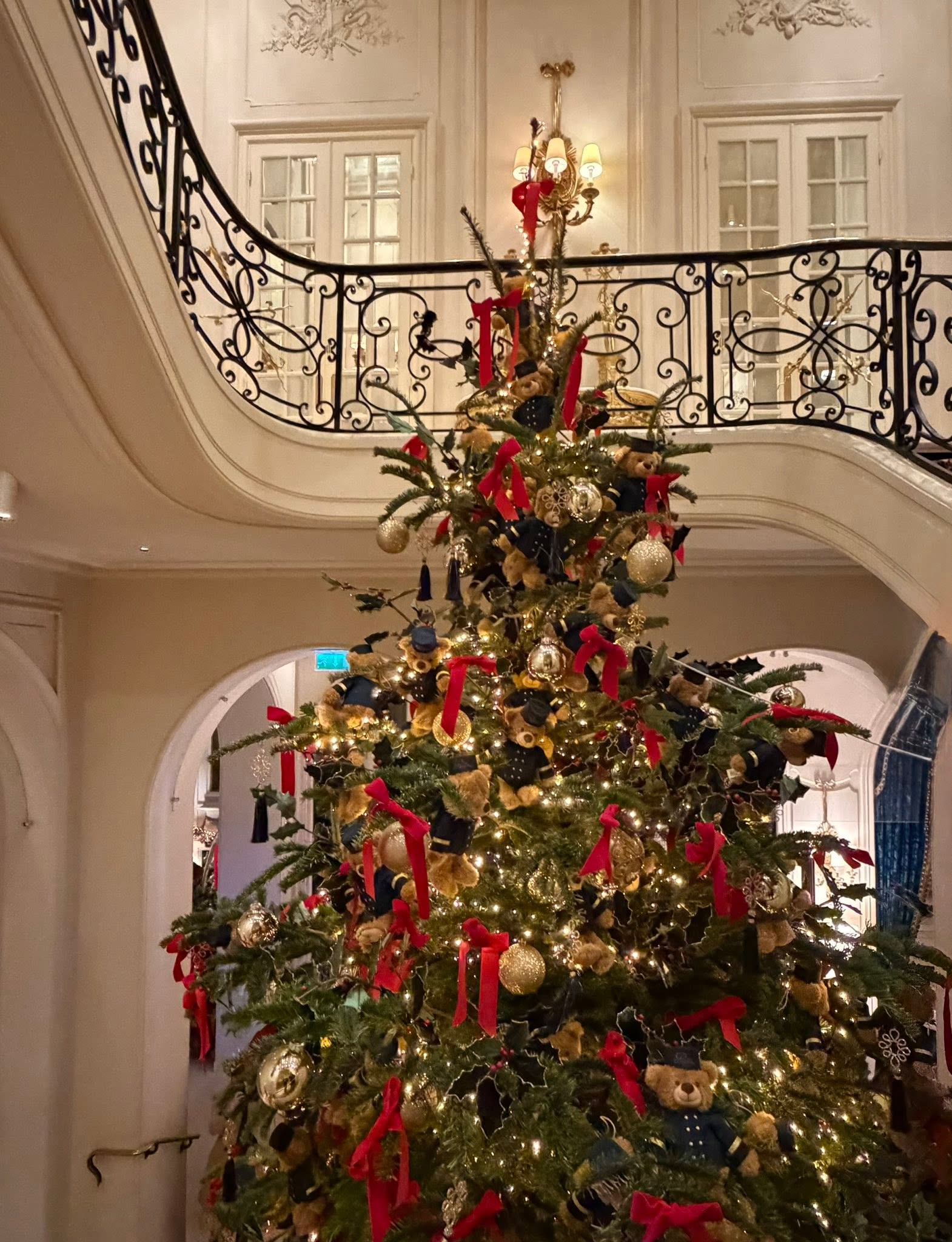
“When I dream of afterlife in heaven, the action always takes place at the Ritz Paris.”
— Ernest Hemingway
“Where history, grace, and hospitality linger in every mirrored salon and royal suite.”
Editor’s Note:
The Ritz Paris has always held a special place in the heart of this editor. A dear family friend—virtually an adopted child of Charles Ritz, son of César—first introduced us to this extraordinary hotel. Since then, no Paris visit feels complete without pausing paying respects to our friends and celebrating their history where light, texture, and memory weave together in timeless harmony.
By Michael de la Force, Editor‑in‑Chief, LIKE Magazine — December 29, 2025
The original palace vision
Opened: June 1, 1898
Founder: César Ritz (1850 – 1918)
Chef Partner: Auguste Escoffier
Style: 18th‑century townhouse façade on Place Vendôme
Between Cartier’s glitter and the hush of haute couture, the Ritz Paris reigns supreme as the archetype of the modern palace hotel. César Ritz’s partnership with Auguste Escoffier introduced private bathrooms, electricity, and telephones as standard, quietly rewriting what comfort and modernity could mean in a grand hotel.
Born into a Swiss farming family, Ritz rose from waiter to Savoy impresario in London before partnering with financier Alfred Beit to realize his Parisian dream. His intuitive sense of ease and theater coined a new vocabulary—“ritzy” became shorthand for a world where service is invisible, surroundings are immaculate, and every guest feels subtly, almost imperceptibly, elevated.
Coco Chanel and the Paris legends
Few names are as entwined with the Ritz Paris as Coco Chanel, who famously declared, “The Ritz is my home.” For more than three decades, she treated the hotel as an extension of her universe at 31 rue Cambon, crossing back and forth through the discreet staff entrance that linked her fashion house and her suite.
From the late 1930s, Chanel installed herself in a three-room suite overlooking Place Vendôme, decorating it with her own Coromandel screens, suede sofas, gilded mirrors, and crystal lamps; it remained her chosen home until her passing in 1971, and today lives on as the Coco Chanel Suite, reimagined with archive photographs and sketches that turn it into a miniature private museum in her honor.
Chanel was not alone in making the Ritz her salon. Marcel Proust, recovering his health and collecting impressions, observed society from a favorite armchair; Ernest Hemingway famously “liberated” the bar in 1944; F. Scott Fitzgerald, Frédéric Chopin, Charlie Chaplin, and countless aristocrats and film stars passed through its salons, many immortalized in the 15 themed suites created to celebrate the hotel’s most faithful muses.
Paris reimagined: salons, stars, and secrets
Rooms & Suites: 142 across 6 floors
Michelin star: Chef Eugénie Béziat, L’Espadon
Cellar: 30,000 bottles curated by Jean‑Philippe Delacour
After its four‑year renaissance and 2016 reopening, the Ritz Paris emerged both refreshed and reassuringly familiar, its craftwork restored, its atmosphere unchanged. L’Espadon, under Chef Eugénie Béziat, continues the tradition of Escoffier with contemporary precision, while Bar Hemingway remains the literary heartbeat of the hotel, a compact sanctuary where cocktails and conversation still feel like acts of authorship.
Bar Vendôme and Salon Proust offer a softer rhythm: afternoon tea taken under a glass roof, madeleines and pastries that nod to Proustian memory, and the kind of quiet, upholstered calm that makes time feel optional. Above, suites like the Imperial, Coco Chanel, and Opera become private theatres of Parisian life—marble, silk, and light arranged to make each stay feel like a beautifully staged chapter.
The royal thread at The Ritz London
If the Ritz Paris belonged to designers and dreamers, The Ritz London has long been the favored backdrop of monarchs, aristocrats, and statesmen. Queen Elizabeth The Queen Mother was one of its most devoted admirers, returning again and again for charity luncheons, private dinners, and quiet celebrations; in later life, it became a place where she could combine public duty with the familiar rituals of proper English hospitality.
Her daughter, Queen Elizabeth II, also maintained a warm, if discreet, relationship with the hotel. Over the decades, The Ritz London hosted receptions, teas, and gatherings connected to her reign; the staff became adept at royal protocol, yet the atmosphere remained that of a private drawing room rather than a public stage. Their bond embodied a shared respect for continuity, tradition, and a certain understated, old‑world courtesy.
Her son, now King Charles III, inherited and extended that link. As Prince of Wales, he attended and inspired events under its chandeliers—supporting charities, arts organizations, and heritage causes that mirrored the hotel’s own custodianship of Edwardian elegance. Today, as king, his association underscores The Ritz London’s role not simply as a grand hotel, but as a kind of unofficial royal parlour on Piccadilly, where statecraft, philanthropy, and family life occasionally intersect.
Beyond the royal family, The Ritz London has sheltered a glittering cast of residents and regulars: titled families in town for “the Season,” international grandees drawn to its reputation for formality, and film and theatre luminaries who appreciate its mix of privacy and ceremony. Over decades, certain suites and corner tables have become closely—and quietly—associated with particular dukes, diplomats, and stars, their presence forming a living, constantly renewed guestbook in gilt and damask.
Paris vs London: two souls, one inheritance
Same Legacy, Different Soul
Paris: Luminous, discreet, fashion‑forward.
London: Gilded, ceremonial, steeped in ritual.
Distinct from the later Ritz‑Carlton group, both houses carry the authentic César Ritz imprint: flawless service, reverence for craftsmanship, and an instinct for making grandeur feel intimate. In Paris, the hotel hides behind its Place Vendôme façade like a private residence, suffused with couture and literary memory; in London, it presents itself openly to Piccadilly, all columns, canopies, and a doorman’s quiet welcome.
If the Ritz Paris whispers in silk and tweed, the Ritz London speaks in brass, crystal, and the rustle of royal orders. Chanel’s long residence on Place Vendôme and the royal family’s enduring presence on Piccadilly form two parallel storylines: one shaped by a fashion icon who turned a suite into her private universe, the other by queens and a king who turned a hotel into an extension of the palace. Together, these two addresses define a single, unbroken narrative of elegance—each distinct, both enduring, forever Ritz.
(Photographs by Michael de la Force™ images)
(Michael de la Force, LIKE® Magazine, 12.29.2025)
Source post: https://facebook.com/674873899/posts/pfbid0do9u34zbBDzaA7GpL4gEpSLZ42zW6UQn3jBJQ555D43XYrFDF67Hid1YjpGytJo7l/