In Versailles, every reflection whispers that beauty was once a form of power.
Prelude: Where History Learns to Pose
Versailles has always understood its angles. Just southwest of Paris, the former seat of the Sun King still gleams like a perfectly lit set — part city, part stage, endlessly rehearsing the performance of grandeur.
What was once a hunting lodge is now a global icon, a fusion of history and beauty that keeps returning to the spotlight: in cinema, couture, photography, and the collective imagination. Versailles never stopped performing; it simply changed audiences.
“Versailles is not about the past. It’s about the performance of memory — the art of staging forever.”
The Lodge That Became a World
Long before the mirrors, it was mud and pasture. The name Versailles first appeared in 1038 on a parchment describing a tiny village of farmers living under minor royal vassals. Its solitude charmed a future king: Louis XIII, who in 1623 ordered a modest brick hunting lodge on a rise above the marsh.
Even then, he might not have sensed the destiny lurking in its geometry.
Sunlight, Geometry, and Power
Louis XIV, ambitious and theatrical, turned his father’s lodge into an empire of perspective. With architect Louis Le Vau, artist Charles Le Brun, and landscaper André Le Nôtre, he built more than a palace — he built an ideology.
By 1682, he had moved his entire court there, creating a world where every wall, fountain, and gaze echoed his authority. Versailles became the mirror of France, and France became Versailles.
“Every inch of Versailles was choreography. Even the sunlight learned where to stand.”
Splendour and Revolt
Centuries of glory could not disguise the cost. Versailles dazzled Europe — but drained the treasury. By 1789, the palace no longer symbolized divine order, but excess. When revolutionaries arrived from Paris demanding bread, they left with the king. Royal silence fell over the marble floors.
The palace lingered, haunted but unbroken, like a grand actress waiting for her next role.
Versailles Rewritten
In the 19th century, Louis‑Philippe revived it as a museum “for all the glories of France.” Then, in 1919, the world returned: the Treaty of Versailles ended one war as ghosts of another still whispered through the mirrors.
In 1979, UNESCO crowned it a World Heritage site — a title Versailles wore like a new crown, polished but permanent.
The City Beside the Legend
Beyond the gates, modern Versailles breathes in coffee and commuter trains. Schoolchildren cross boulevards mapped centuries ago for parades. Markets bloom beneath marble cornices. And yet the palace still defines the rhythm — a gilded metronome measuring time itself.
Every season brings a new performance: fountain ballets, light installations, open‑air operas. The stage never closed; it merely expanded.
Gardens That Learned to Dream
Le Nôtre’s gardens remain Versailles’ finest script — the original runway of the Sun King. Paths unfold like pages of mythology; Apollo waits in marble beside hidden groves. The landscape is part pageant, part prayer, a geometry of desire and dominance.
Walking there today is like stepping through choreography: grandeur metered in hedges, power softened by birdsong.
“Even silence at Versailles feels designed.”
Versailles in Vogue — and Beyond
Few places photograph as well as Versailles. Its mirrors crave couture; its courtyards wait for high heels on cobblestone. Vogue®, Harper's Bazaar®, and Vanity Fair® have each returned to these halls, staging their own royal resurrections in silk, lace, and light.
The “Battle of Versailles” of 1973 remains mythic — a fashion showdown that changed the world. That night, American designers electrified a French audience, and Black models like Pat Cleveland and Bethann Hardison commanded a European runway for the first time. Versailles, reborn yet again, learned how revolution could shimmer too.
On screen, Sofia Coppola’s Marie Antoinette (2006) reimagined decadence with candy‑colored melancholy, while the Versailles series (2015–2018) revived Louis XIV’s world for binge‑watching modernity. The palace, always an actor, simply found a new script.
Artists like Jeff Koons, Anish Kapoor, and Joana Vasconcelos have since brought the dialogue into the present, placing steel balloons and mirrored voids beneath baroque ceilings. Versailles absorbs each provocation the way it absorbs light — completely, beautifully.
“Versailles belongs to whoever can dream loudly enough inside it.”
A Living Frame
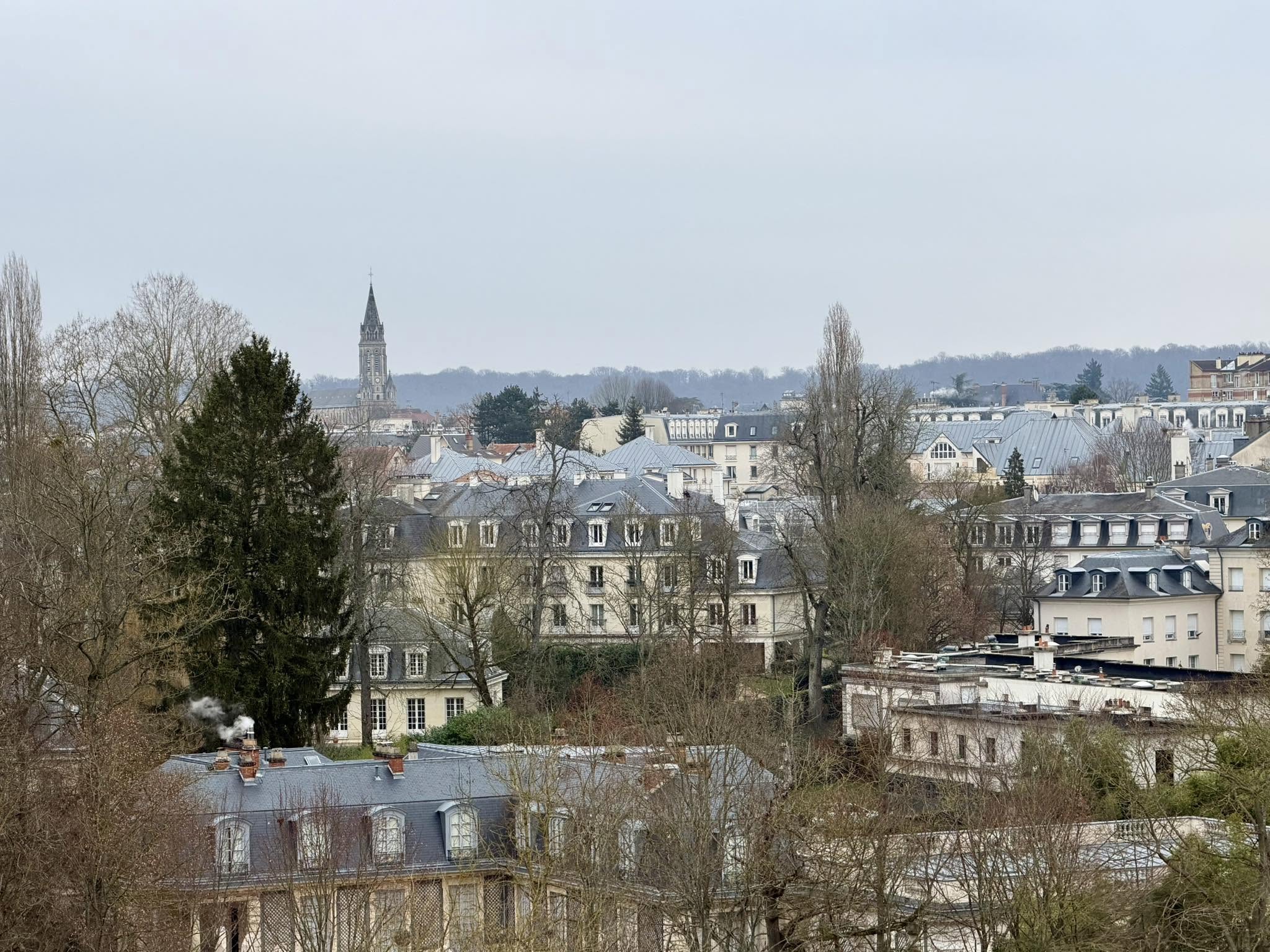
Step beyond the palace and you’ll find Versailles the town — quieter but still gilded at the edges. Morning shoppers pass through cobbled squares once used for royal processions. Students sit in cafés built against 18th‑century stone. Here, grandeur hums beneath the everyday.
In a recent photograph by Michael de la Force for LIKE® Magazine, sunlight brushes across the Grand Canal. The reflection doubles itself — city, sky, and time balanced on a single ripple. It’s the same vision that’s drawn artists for centuries: Versailles as the eternal muse, shimmering between luxury and life.
Fashion and cultural references courtesy of Vogue® Archives.
(Michael de la Force, LIKE® Magazine, 12.29.2025)
Source post: https://facebook.com/674873899/posts/pfbid0UJdGKRNhGGALx9uwe9ENt4fPra8h81wHjZ8smWYaNibXBwNPb7fNK66CQKEhoWpPl/