The Plain of a Thousand Spires
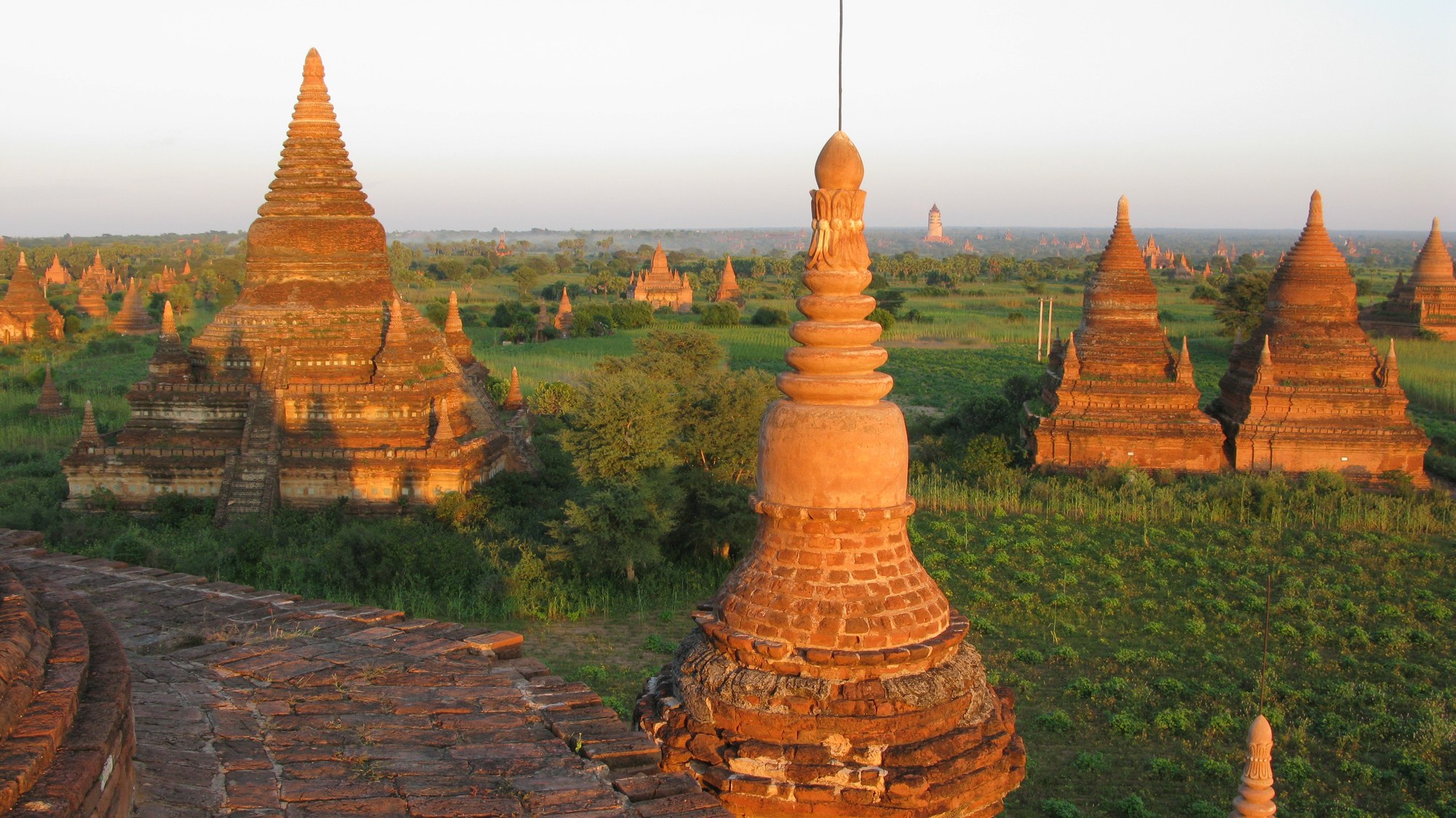
At the end of the day on the plain of Bagan the heat lets go first. Then the color changes. The dust rising from the cart tracks turns gold, the Irrawaddy goes from brown to pewter, and across miles of scrub and palm the temples begin to stand out against the sky. Some are huge, terraced and capped with gilded spires. Most are small and plain: a brick bell, a weathered shrine, a stupa no taller than a house. They keep appearing, one behind another, out to the haze over the far hills. When the sun reaches the horizon, the spires become silhouettes and the red light stays in the air a long time after it is gone from the ground.
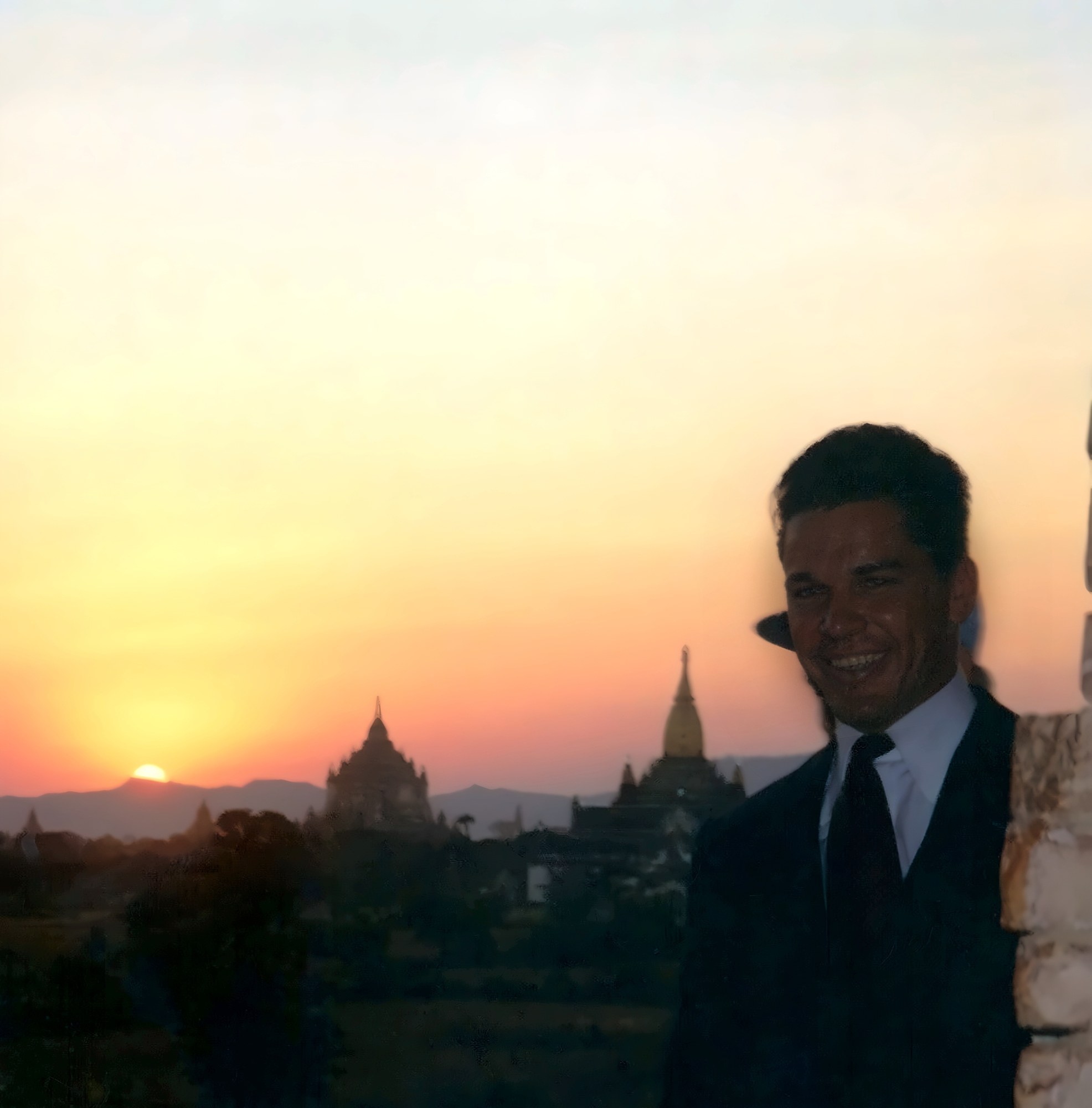
The publisher's own photograph from Bagan was taken in that hour, with a golden spire rising out of the plain behind him. The spire is possibly that of Ananda or Thatbyinnyu, two of the great monuments whose gilded tops rise above the plain.
A kingdom written in brick
Bagan (older maps spell it Pagan) was the capital of the first kingdom to unite the Irrawaddy valley. Its golden age began around 1044, when King Anawrahta came to the throne. Anawrahta brought the region under one crown and adopted Theravada Buddhism as the faith of his court. Building a monument earned religious merit, so for roughly 250 years kings, queens, nobles and ordinary families poured their wealth into brick and stucco. They built stupas to enshrine relics, hollow temples you could walk through, monasteries, libraries and ordination halls. The bricks were baked from river clay. Inside, painters covered the corridors with scenes from the Buddha's lives.
Much of that building still stands. When UNESCO inscribed Bagan on the World Heritage List in 2019, it recorded 3,595 monuments across eight protected zones. The inventory also counts inscriptions, murals and sculpture, and the murals are among the most important surviving records of early Southeast Asian Buddhist painting.
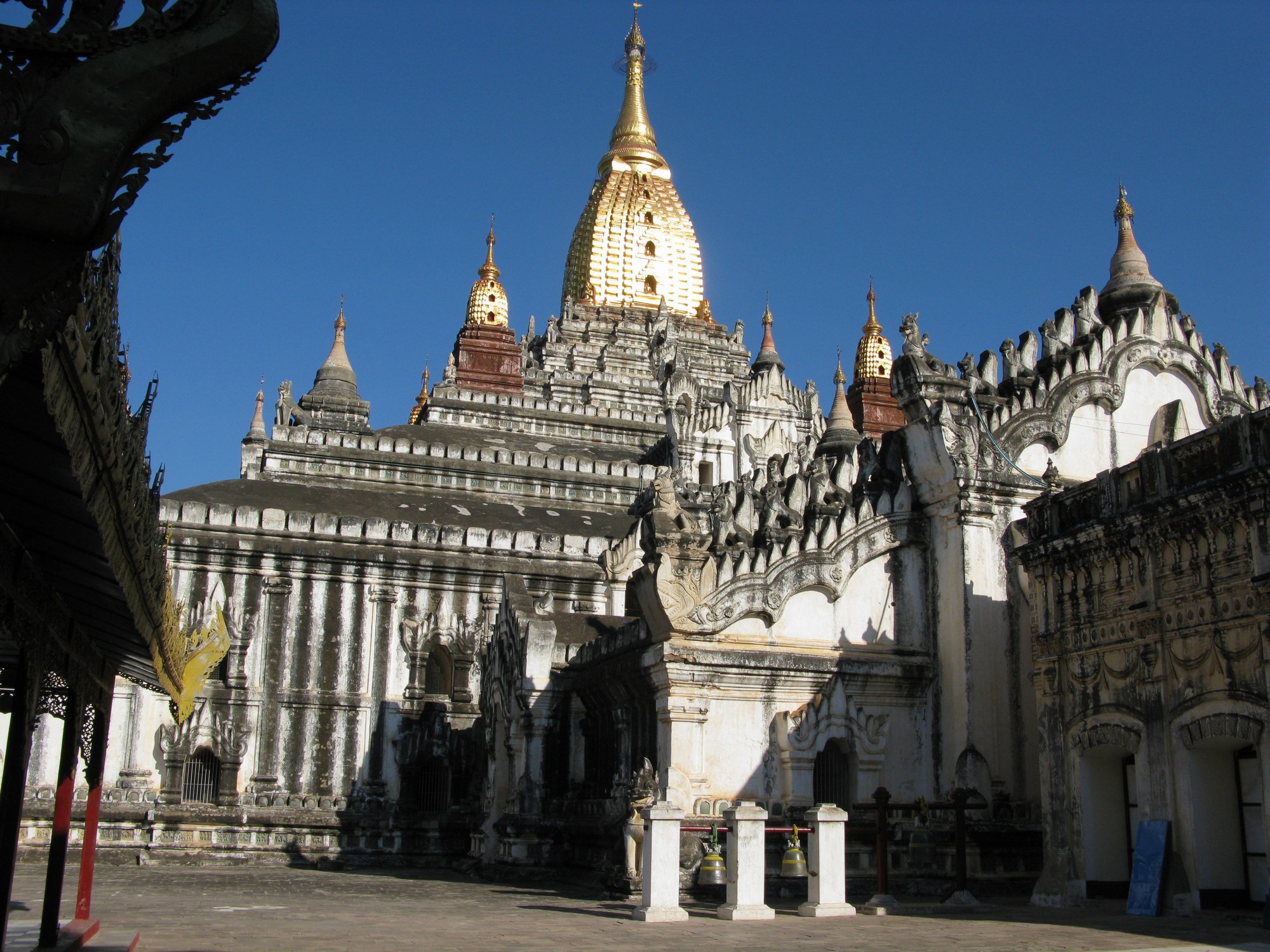
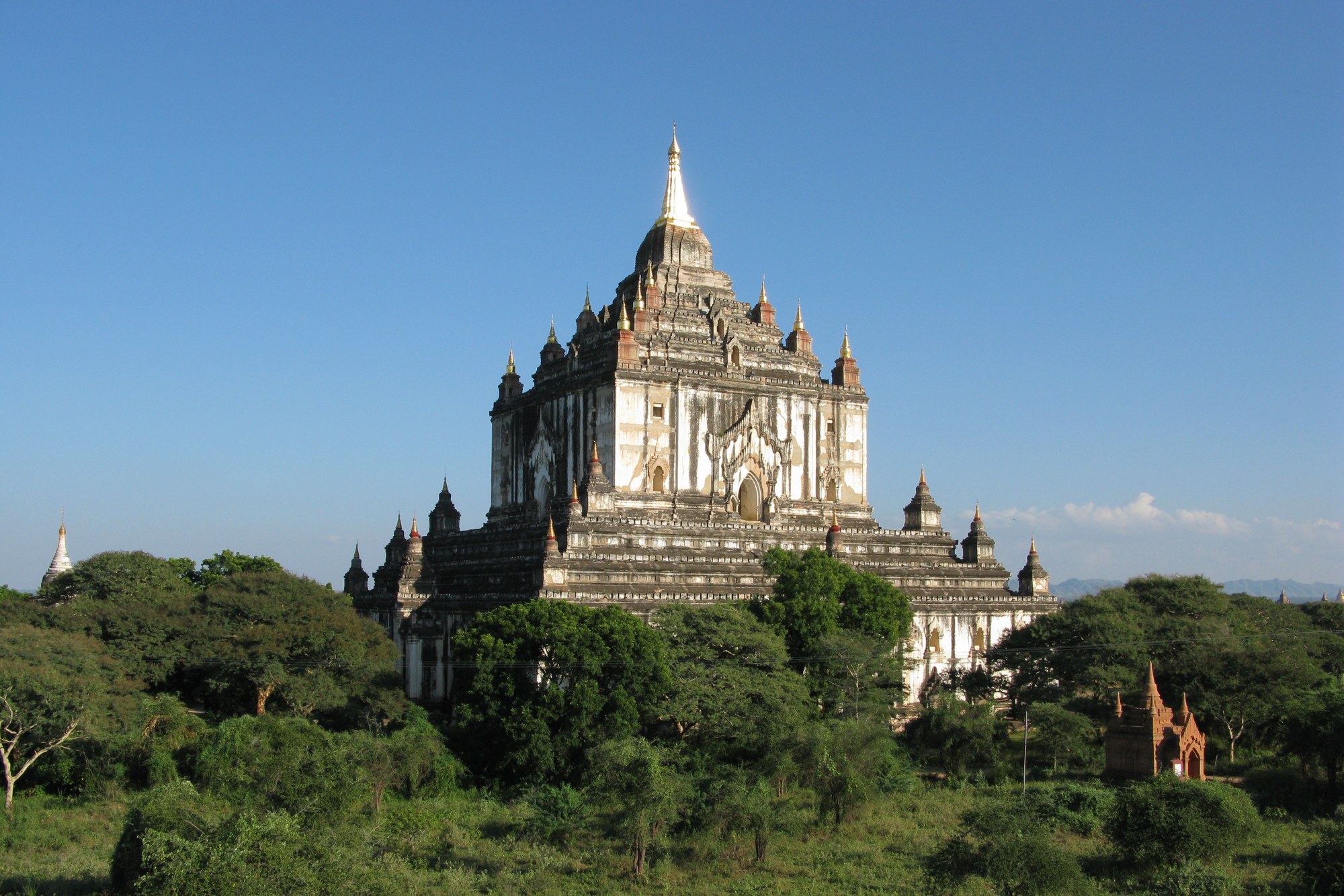
Two temples define the skyline. Ananda, completed around 1105 in the reign of King Kyanzittha, is pale and symmetrical, with a gilded spire. Four colossal standing Buddhas, one for each direction, stand in its high, shadowed interior. Thatbyinnyu, built in the following century, is generally counted as the tallest temple on the plain. Its name evokes the Buddha's omniscience, and its white terraces and spire rise above everything around them.
The kingdom declined in the late 13th century, when Mongol pressure from the north and internal fragmentation broke central power. The temples outlasted the kings. Through centuries of earthquakes, pilgrims and restoration of uneven quality, Bagan has never stopped being a living religious site. A magnitude-6.8 earthquake on August 24, 2016 damaged several hundred monuments. UNESCO and international partners helped with assessment and stabilization, and that work fed into the 2019 listing. A far larger magnitude-7.7 quake struck near Mandalay and Sagaing on March 28, 2025. It caused heavy loss of life across central Myanmar and damaged religious structures throughout the region.
Watching the sun go down, then and now
For years, the classic way to see the sunset was to climb onto a temple terrace. That changed in 2016. After photos of a group partying atop a pagoda circulated online, the Ministry of Culture announced a climbing ban from March 1, 2016, citing the monuments' safety and disrespectful behavior. Within days it clarified that five popular pagodas would stay open to climbers, including Shwesandaw. In 2017 the government announced that it would raise artificial viewing mounds, starting with the banks of Ko Mauk Lake, and fully end sunset climbing once they were finished. Rules have shifted since and may differ again today. Ask locally which mounds and platforms are approved, and stay off the monuments.
Washington Picks Up the Phone
Washington and Naypyitaw are talking again after several years of distance.
That is changing. In early October 2026, Reuters reported that the Trump administration had opened direct talks with the military-installed government. Michael Vance, the State Department's assistant secretary for intelligence and research, joined meetings with Min Aung Hlaing in Naypyitaw on September 15–16. The immediate goal was the release of a detained American businessman, Adam Castillo, and he was later freed. The talks also cover the scam centers that defraud Americans and, reportedly, rare-earth minerals. On October 9 the Treasury Department lifted sanctions on one individual, the daughter of a military-linked tycoon, following a lawsuit.
This is engagement, not recognition: no decision on formal recognition has been announced, and the State Department says it has also met other groups inside the country. Supporters call the outreach practical, since consular cases, scam centers and critical minerals are American interests. Whether the opening widens will depend on what both sides deliver.
Who Leads Myanmar Now
The military held phased general elections in December 2025 and January 2026. The military-aligned Union Solidarity and Development Party won the most seats. On April 3, 2026, the new parliament elected Min Aung Hlaing, the former commander-in-chief, as President. He had stepped down as commander-in-chief days earlier. Nyo Saw and Nan Ni Ni Aye were named vice presidents. Parliament is in session as of this writing. On October 14 it approved the president's appointment of Lt-Gen Yar Pyae as defense minister.
The armed forces now have a new chief. On March 30, 2026, General Ye Win Oo, a former military intelligence chief and a close Min Aung Hlaing loyalist, took over as commander-in-chief of the Defence Services.
Friends, Partners and Patrons
Myanmar has no formal military alliance, but its partners are clear. China is its largest trading partner and biggest investor, and it has backed peace talks along the shared border. Russia is a leading arms supplier and diplomatic defender. India and Thailand are pragmatic neighbors with energy, border and security interests. Myanmar remains a member of ASEAN. The bloc has pressed its "Five-Point Consensus" for peace. Some members, including Malaysia, are now resuming high-level contact; President Min Aung Hlaing's official visit to Malaysia was announced this month.
What Myanmar Sells the World
The CIA World Factbook's recent editions list Myanmar's top exports as garments, precious stones, natural gas, dried legumes and rice. Earlier editions also flag rare-earth elements such as yttrium and scandium. Jade and rubies from Mogok and Hpakant are world-famous. Natural gas from offshore fields is piped to Thailand and China. World Bank trade data show about $3.2 billion in gas exports in 2024, roughly $1.8 billion to Thailand and $1.4 billion to China. The Factbook's most recent partner list ranks China (about 32%) and Thailand (about 16%) first, followed by Japan, Germany and India. The Factbook also notes that methamphetamine and opiates remain significant illicit trade.
Shwedagon and the Diamond at the Top
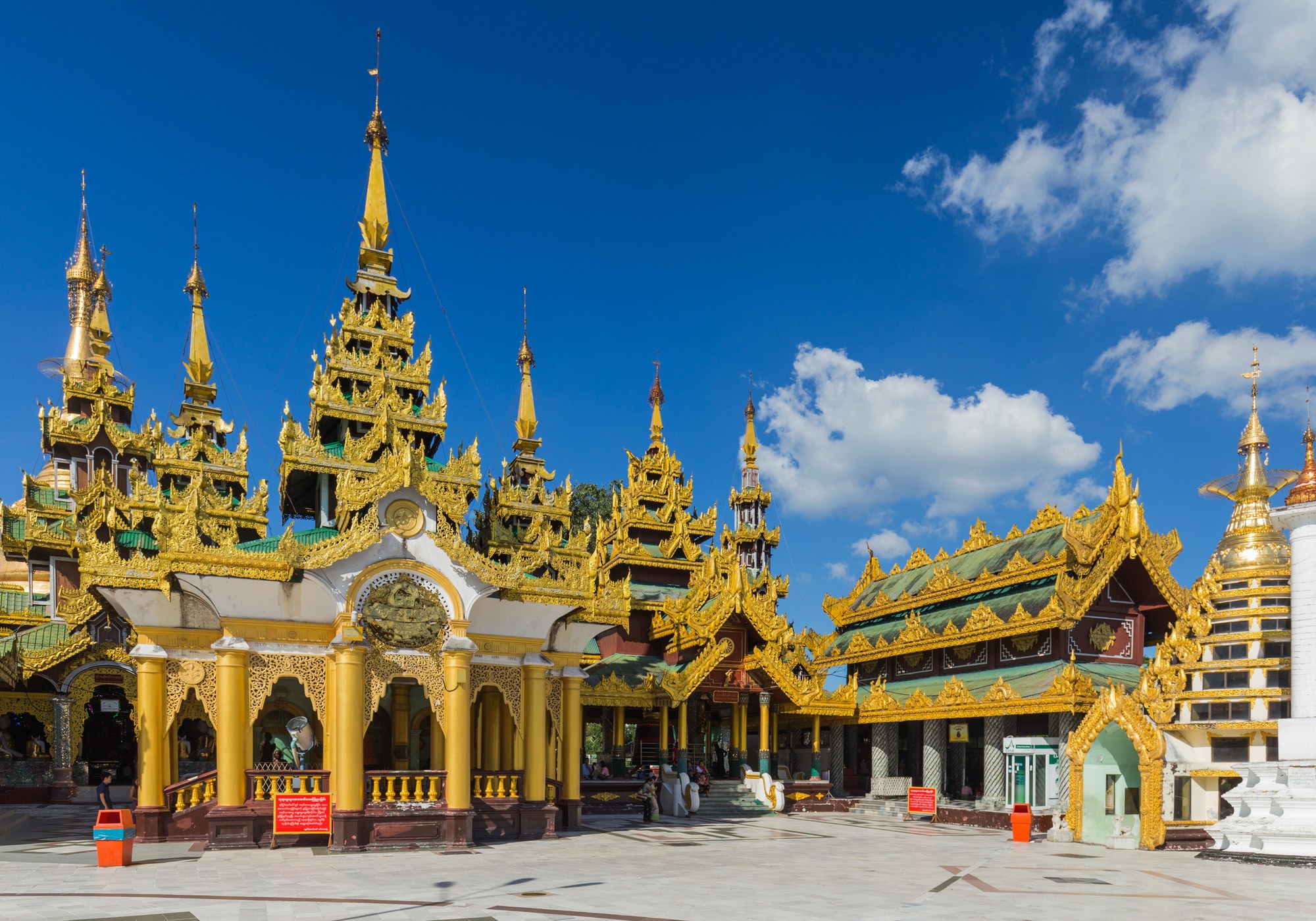
If Bagan is Myanmar's past, the Shwedagon Pagoda in Yangon is its living heart. The great gilded stupa rises from Singuttara Hill above the city. Tradition holds that it enshrines relics of the Buddha, including strands of his hair, and dates it to the Buddha's own lifetime. Archaeologists put its origins somewhere between the 6th and 10th centuries CE. In the 15th century, Queen Shin Sawbu reportedly gave her own body weight in gold to gild it. Pilgrims have kept up that tradition of donating gold ever since.
At the very top, too high for the eye to resolve, sits the hti, the jeweled umbrella finial. The pagoda's trustees list a single diamond of about 76 carats crowning the "diamond bud" above the hti. Their published figures put about 4,351 diamonds totaling some 1,800 carats in the diamond bud. They count more than 838,000 jewelry items on the umbrella installed in 1999, along with thousands of gold and silver bells. Tour guides and older references often repeat a different set of figures: 5,448 diamonds and 2,317 rubies. Those numbers come from an older description of the finial, and LIKE uses the trustees' figures.
The Irrawaddy, and a Gentle Correction About Rowing With Your Feet
The Irrawaddy, now officially spelled Ayeyarwady, runs more than 2,000 kilometers from the Himalayan foothills of Kachin State to a vast delta on the Andaman Sea. It is the country's spine. Rice comes down it, teak once floated down it, and Bagan, Mandalay and many older royal capitals were built along it. Slow boats between Mandalay and Bagan remain one of the classic journeys in Asia.
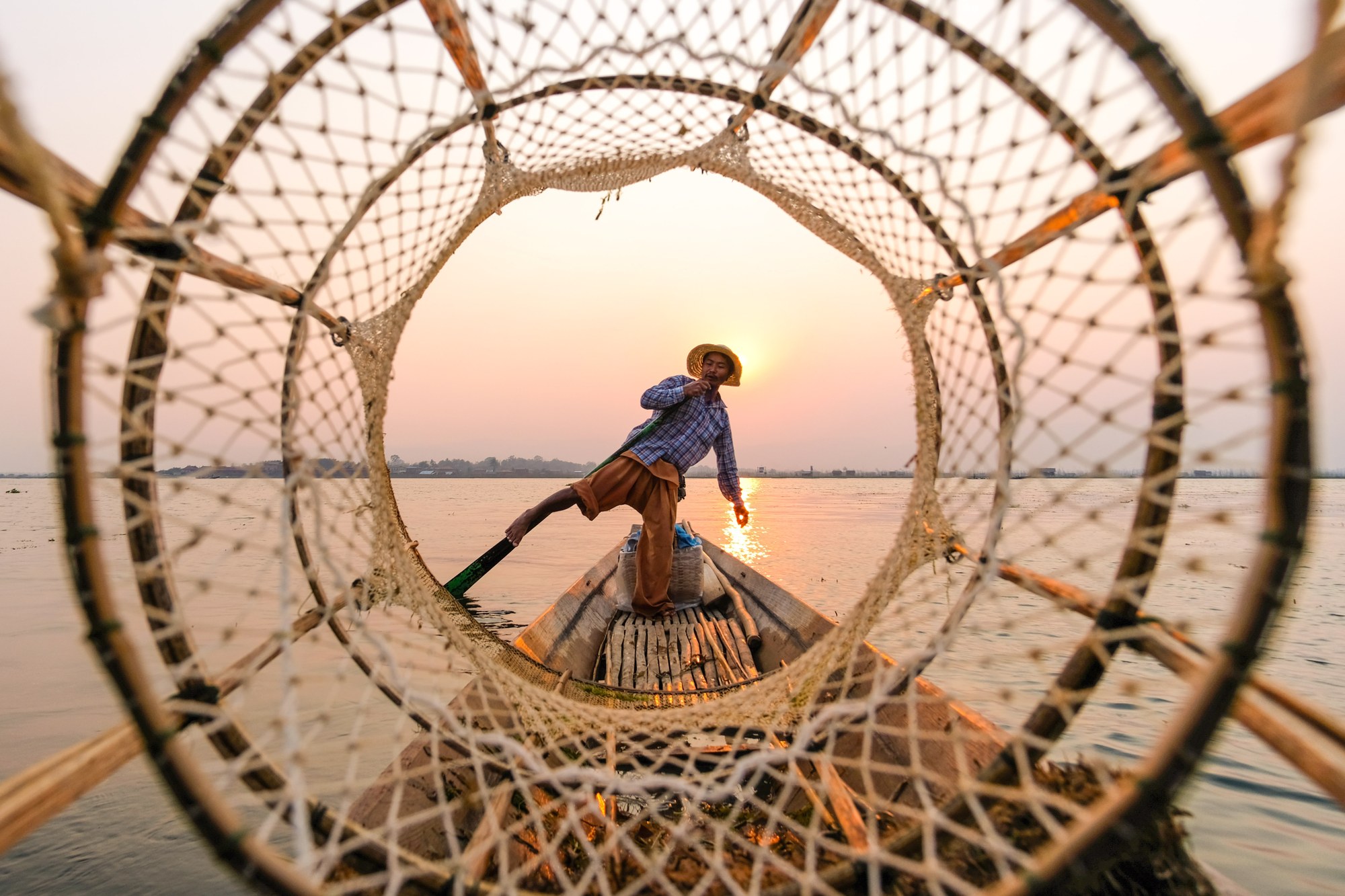
Many travelers carry home one memorable image: a fisherman standing on one leg at the stern of a narrow boat, the other leg wrapped around an oar, sculling across still water. That image does not come from the Irrawaddy. It comes from Inle Lake in Shan State, several hundred kilometers east. It belongs to the Intha people, whose name is often rendered "sons of the lake." Standing to row frees the hands for nets and lets the rower see over the reeds and floating gardens. On a big brown river the method would make little sense. On a shallow, weedy lake it is ingenious. Visit both places, but credit the Intha.
A Table at the Palace: A Publisher's Recollection
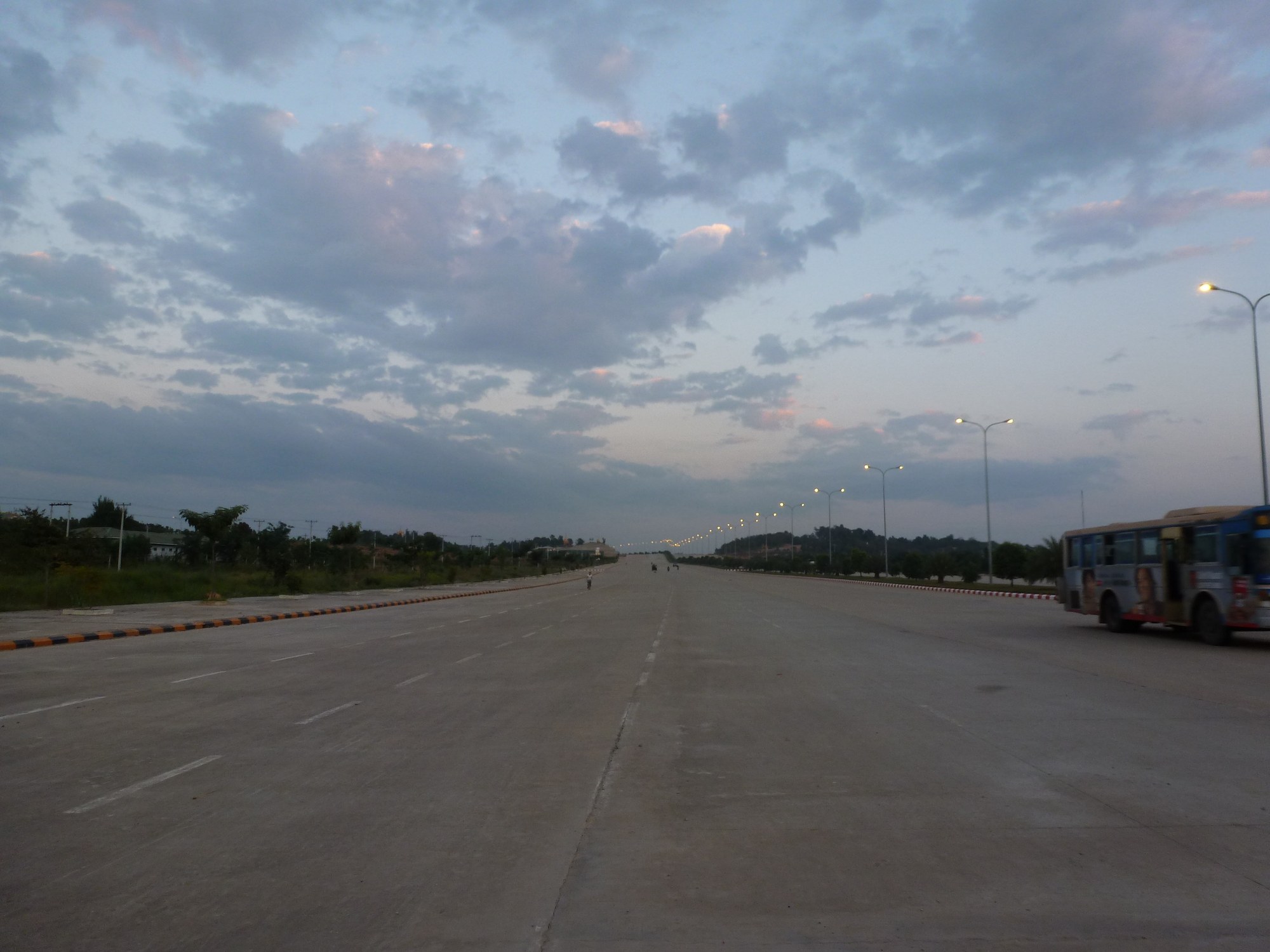
The military moved Myanmar's seat of government out of Yangon in November 2005 to a new capital built in the countryside near Pyinmana. In March 2006 it was formally named Naypyitaw, often translated as "seat of kings." At the heart of its government quarter sits a presidential palace complex. It is a sprawling compound set apart behind a moat.
I was a guest at the new presidential compound in Naypyitaw, and our military hosts served hot pot. That is how I remember it, at least, and the arrangements may well have changed since. The broth simmered in the middle of the table, and everyone reached into the same pot. Sharing one pot is a gesture of hospitality in much of the region, and it was meant that way. I remember the gesture more than the menu.
I also remember a small white church near the foot of a hill, a quiet Christian presence in a Buddhist-majority land. The capital region's Christians worship in a number of congregations, described below.
Faiths of the Golden Land
By the numbers. Myanmar's 2014 census, the most recent with published religion data, found that 87.9% of the population is Buddhist. Christians make up 6.2%, Muslims 4.3%, animists 0.8%, and Hindus 0.5%. Another 0.2% follow other religions and 0.1% reported none. Those totals include an estimated 1.09 million people in Rakhine State whom the census did not count. Census officials did not enumerate them. Among people actually counted, the Buddhist share was 89.8% and the Muslim share 2.3%.
The law. The 2008 constitution gives every citizen freedom of conscience and the right to practice religion, "subject to public order, morality or health." It "recognizes [the] special position of Buddhism" as the faith of the great majority. It also recognizes Christianity, Islam, Hinduism and Animism as religions existing in the Union. In 2015, four so-called "race and religion" laws covering population control, religious conversion, interfaith marriage and monogamy were adopted with backing from the nationalist monks' group Ma Ba Tha. Rights groups warned that they would be used against Muslims and other minorities.
Buddhism. Theravada Buddhism shapes the calendar, the landscape and family life. Many Buddhists also make offerings to the nats, guardian spirits of places and households. That older practice sits alongside Buddhism rather than against it. The census's 0.8% animist figure counts only those who name spirit belief as their main religion.
Christianity. Christians are concentrated among the Chin, Kachin, Karen and other ethnic communities, mostly as Baptists and Catholics, with Anglicans and others. Even the purpose-built capital has a network of congregations. Saint Michael Catholic Church and Saint Luke's Anglican Church both stand in old Pyinmana. Pyinmana Baptist Church, on Bogyoke Road, is listed by the Myanmar Council of Churches. Several congregations reflect people who came to work in the new capital: a Chin Baptist Church in the Te Gyi Kone area, the Nay Pyi Taw Kachin Baptist Church in Ta Dar U, and the Naypyitaw Evangelical Baptist Church in Lewe. A Baptist Mission Church and a second Chin Baptist church are mapped in Pyinmana. We could not determine which of these, if any, is the small white church the publisher remembers.
Islam. Muslims live across the country, including in Rakhine State and Yangon, and include the Kaman, one of the officially recognized national races, and long-settled urban communities of South Asian and other descent.
Hinduism and Sikhism. Hindus, many descended from colonial-era migrants from South Asia, keep temples in Yangon and other cities. Sikhs first arrived in the late 1800s as military police in the colonial forces. Yangon's main gurdwara dates to 1899, and roughly 30 gurdwaras remain across the country, some served by only a family or two.
Judaism. The Musmeah Yeshua Synagogue on 26th Street in downtown Yangon was built between 1893 and 1896. It replaced an earlier wooden building and is the last synagogue in the country. At its peak before World War II, Yangon's mainly Baghdadi Jewish community numbered around 2,200 to 2,500.
Armenian Christianity. The Armenian Apostolic Church of St. John the Baptist was built in 1862 and consecrated in 1863. It is generally described as the oldest church still standing in Yangon. Armenian merchants reached Burma from Persia in the 17th century, long before the British did.
Chinese traditions and the Baháʼí Faith. In Yangon's Chinatown, the Kheng Hock Keong temple on Strand Road is dedicated to Mazu, protector of sailors and traders. Founded in 1861 and rebuilt in 1903, it is still maintained by the Hokkien community and is the city's largest Chinese temple, with Taoist-style architecture. The Baháʼí community traces its local roots to 19th-century Rangoon. In 1899, members from Burma carried a marble sarcophagus made in Mandalay to Haifa for the Shrine of the Báb.
The Poppy Fields
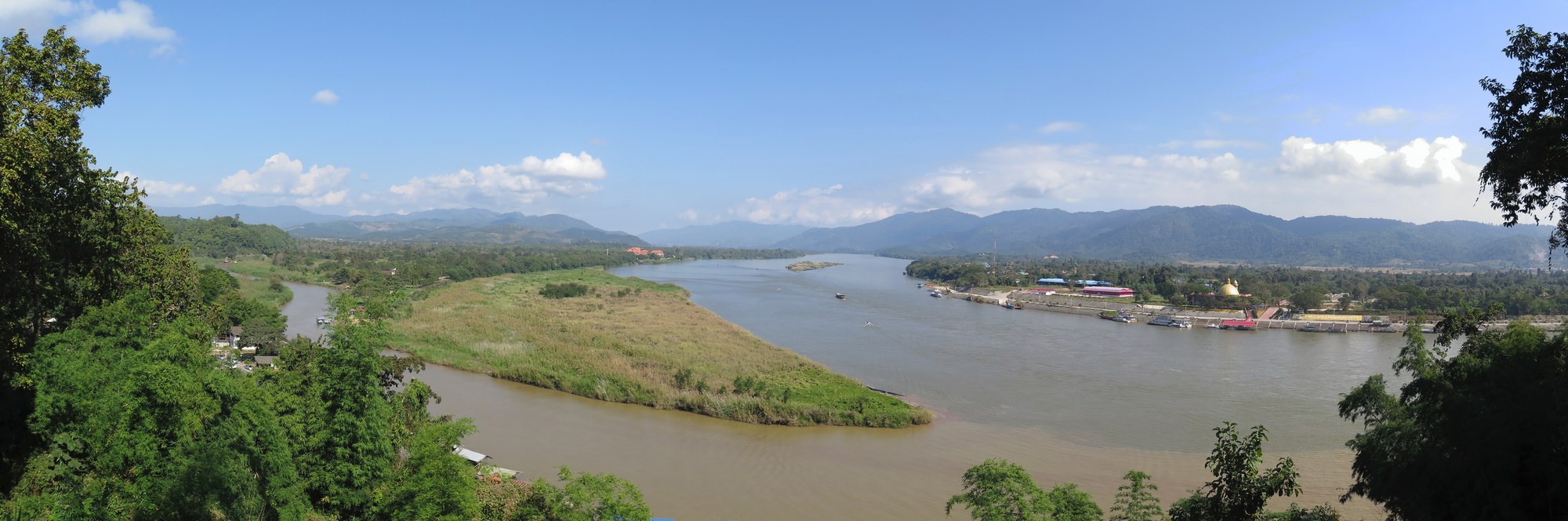
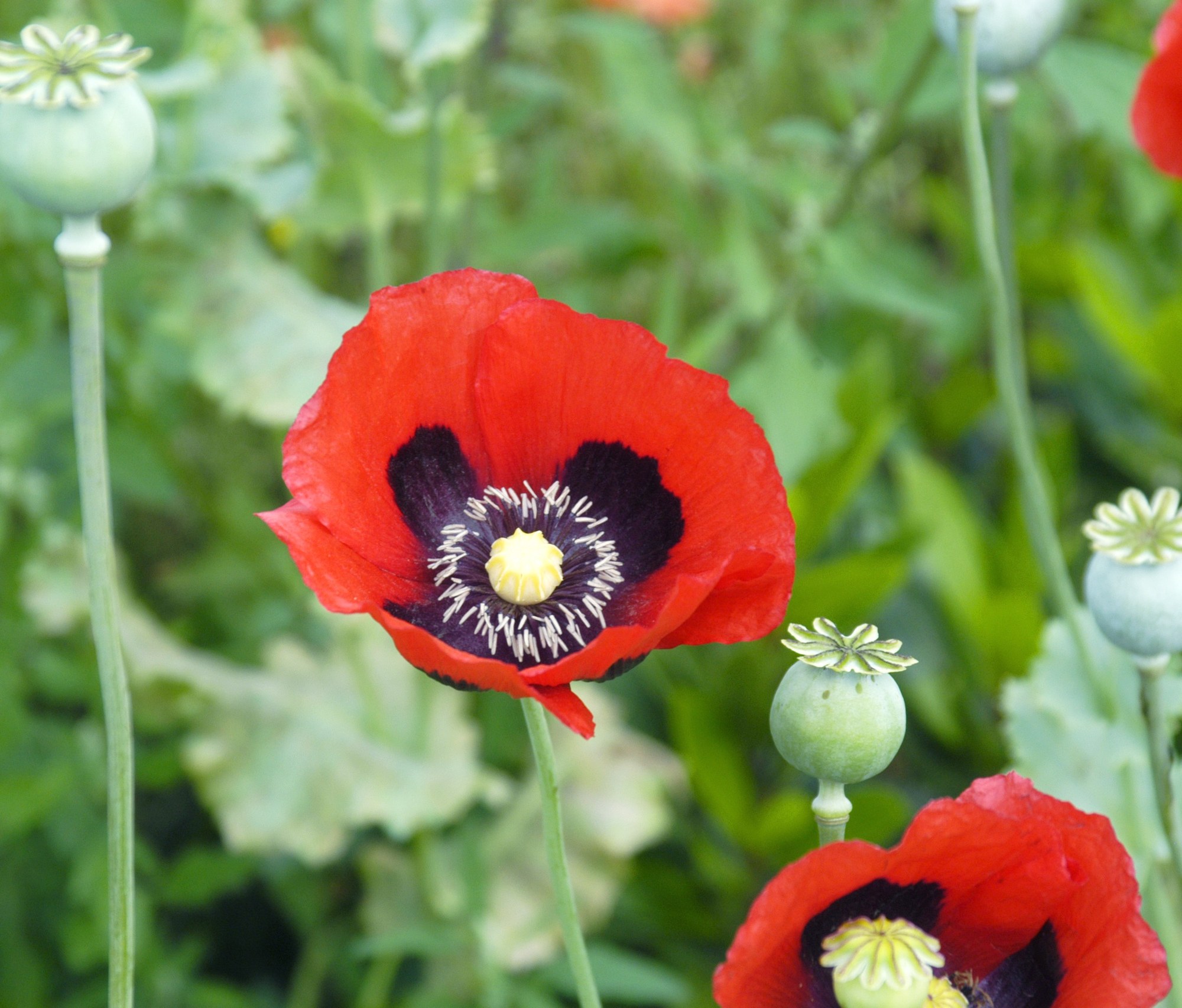
Myanmar's eastern hills, where it meets Thailand and Laos, form the "Golden Triangle." For much of the 20th century this was one of the world's great sources of opium and heroin. Warlords and insurgent armies funded themselves with the trade, and colonial and Cold War politics helped it grow. Cultivation fell sharply from the late 1990s into the 2010s and then climbed again after the 2021 coup.
According to the UN Office on Drugs and Crime's 2025 survey, Myanmar's poppy cultivation reached a ten-year high of about 53,100 hectares. Estimated opium output was around 1,010 tons, more than twice Afghanistan's after the Taliban's ban there. That makes Myanmar the world's leading known source of illicit opium. Farmgate prices roughly doubled between 2019 and 2025. For many highland farmers, poppy is a crop of last resort, not of choice.
More Things Worth Knowing
- Two names. The military changed the country's English name from Burma to Myanmar in 1989. The US government long used "Burma"; both remain in use.
- Tea-leaf salad. Lahpet thoke, fermented tea leaves tossed with crunchy beans, nuts and garlic, is one of the few places in the world where tea is eaten.
- Travel today. The US State Department advises against travel to Myanmar because of armed conflict and other risks. Check current advisories before planning any trip.
© 2026 LIKE® Magazine. Lead photo: LIKE Magazine archive. Other photographs via Wikimedia Commons under Creative Commons licenses, credited individually above: Evening light over Bagan's temple plain: Vyacheslav Argenberg / Wikimedia Commons, CC BY 4.0; Ananda Temple: Vyacheslav Argenberg / Wikimedia Commons, CC BY 4.0; Thatbyinnyu: Vyacheslav Argenberg / Wikimedia Commons, CC BY 4.0; The Shwedagon's gilded stupa in Yangon: Marcin Konsek / Wikimedia Commons, CC BY-SA 4.0; An Intha fisherman rows with one leg on Inle Lake in Shan State: Benh Lieu Song / Wikimedia Commons, CC BY-SA 4.0; A broad: Hybernator / Wikimedia Commons, CC BY-SA 3.0; The Golden Triangle: Douglas Perkins / Wikimedia Commons, CC BY 4.0; Opium poppies (illustrative: Tanja Niggendijker / Wikimedia Commons, CC BY 2.0. Licenses: creativecommons.org/licenses. Sources and dates checked are listed in the editor's source file.
#LIKEMagazine #LIKECulture #Myanmar #Bagan #Shwedagon #InleLake #Travel #Diplomacy #michaeldelaforce