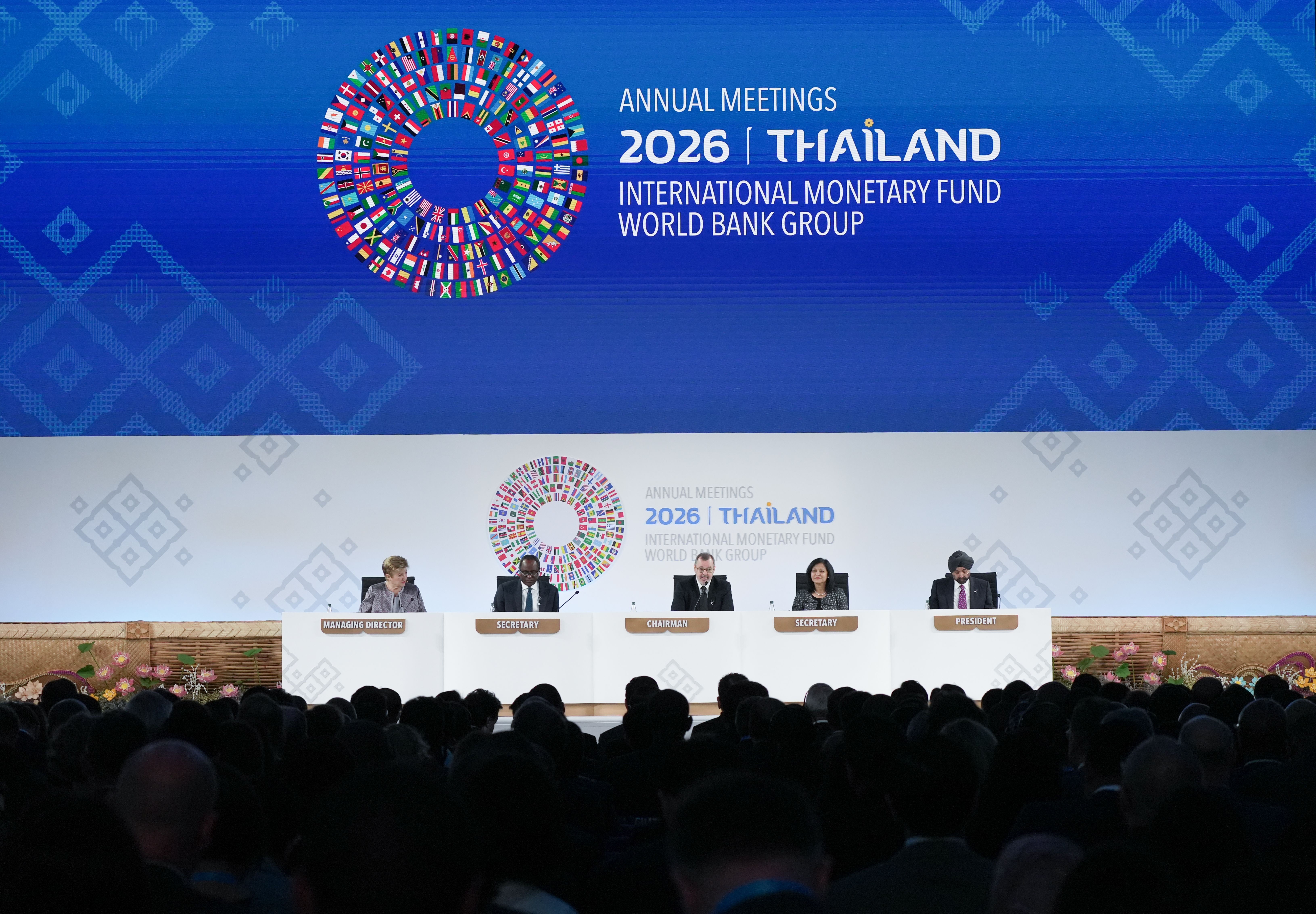
The 81st Annual Meetings of the International Monetary Fund and the World Bank Group are underway here under a banner Thailand chose for itself: "Thailand's New Horizons: Empowering People, Building Resilience."
It is the first time in 35 years the meetings have come to Bangkok, where the Queen Sirikit National Convention Center, built for the 46th Annual Meetings in 1991, is now hosting the 81st, and more than 15,000 delegates from 191 countries have arrived for what the Thai press has taken to calling the "Olympics of Finance."
The organizing ideas tell the story before the numbers do. Thailand's host theme rests on four pillars: digital transformation and artificial intelligence; the opportunities of middle powers in a fragmented world; a new financial architecture for climate adaptation; and demographic change and the longevity economy. Finance Minister and Deputy Prime Minister Ekniti Nitithanprapas has distilled the program into his "4T" framework (Target, Transition, Transformation, Together) and a single national pitch to the assembled capital: Thailand as a "Trusted Connector" for investment.
The Resilience Test
The week's defining session arrived early. On Tuesday, the Thai flagship panel "Building Resilience in a Fragmented World" brought together IMF Managing Director Kristalina Georgieva, World Bank President Ajay Banga, Ekniti, and Riikka Purra, Finland's deputy prime minister and finance minister, an emblem in one room of the host's thesis that middle powers can hold the global economy's center together.
Georgieva's message, delivered across several Bangkok appearances, was that the resilience the Fund keeps measuring is borrowed, not banked. "Don't take this resilience for granted. We have to work for it," she said. In her curtain-raiser a week earlier in Singapore, she named the three crosscurrents that will decide whether the decade's underwhelming growth can be bettered: "the rapid arrival of AI, persistently high energy prices, and record levels of public debt."
That framing is now the week's refrain. Chief Economist Silvana Tenreyro warned that resilience "is reaching its limits, so we need to move from just coping to rebuilding." On fiscal day, the IMF's Rodrigo Valdes was blunter still: "The fiscal results this year are worse than expected six months ago, and worse than they were one year ago."
The Numbers: What the Fund Now Expects
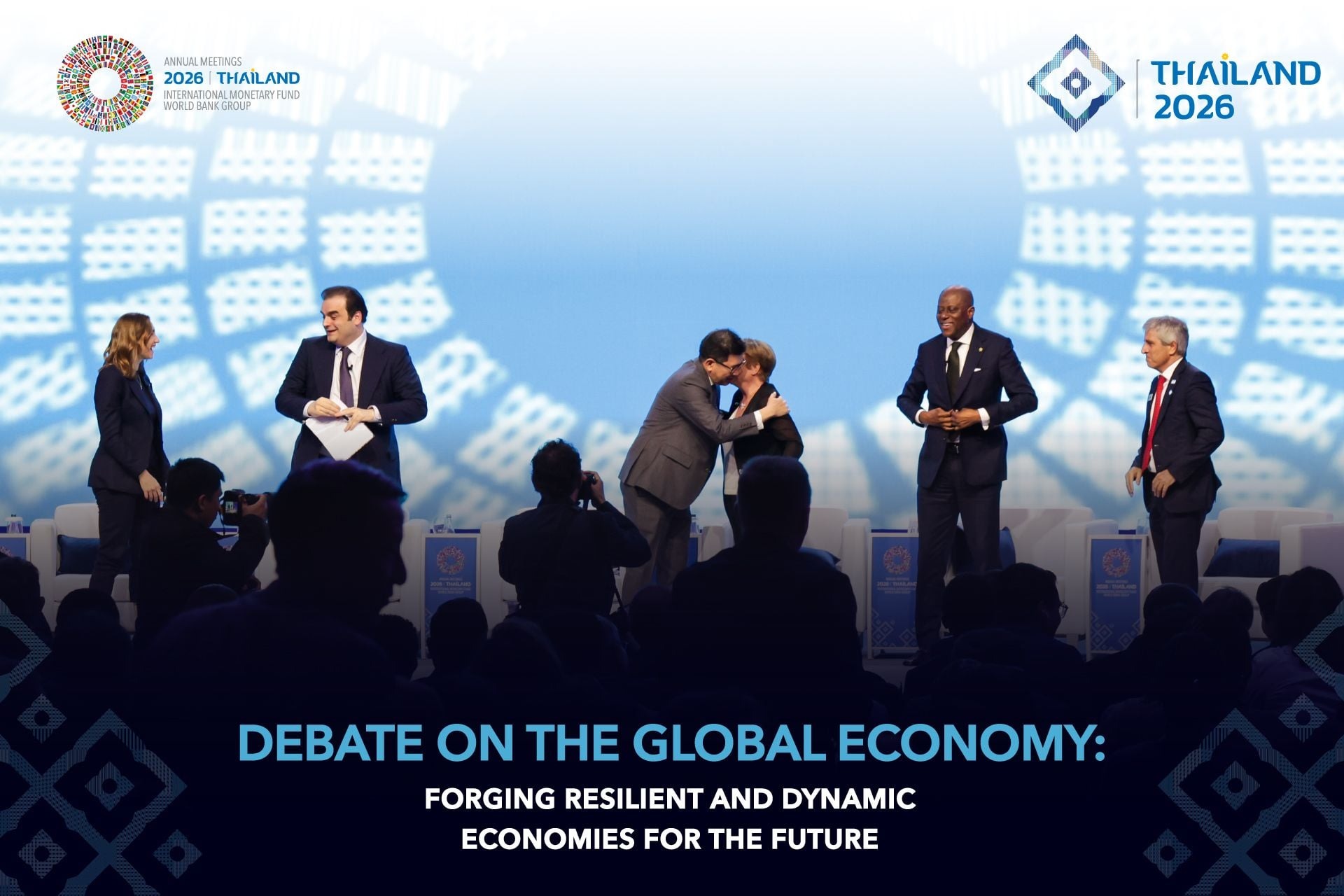
The October World Economic Outlook, released Tuesday in Bangkok, revised the forecast upward and downward in the same breath. Global growth is now projected at 3.1% in 2026, up from July's 3.0%, and 3.4% in 2027, a recovery built, the Fund says, on AI investment propping up demand even as an energy supply shock drags.
"AI, love it, hate it. It's already here," Georgieva said Monday. "That shift into higher gear is what is keeping the world economy growing at around 3%, despite the fact we are being dragged down by the energy supply shock."
Asia carries the upgrade. The ASEAN-5 (Indonesia, Malaysia, the Philippines, Singapore and Thailand) is now seen growing 4.4% in 2026, revised up from 4.1% in July, on data-center investment riding the global tech-cycle upturn. Within the region, the Fund's country detail shows Vietnam at 8.4%, Indonesia at 5.1%, Malaysia at 5.2%, Singapore at 5.0% and Thailand at 2.1% for 2026; the Philippines is projected as the second-fastest grower in ASEAN next year.
The shadows in the report are as specific as the upgrades. Inflation is running at 4.7% this year and 4.1% next, by the Fund's own figures. Oil is up 41%, averaging $96 a barrel, and above $100 amid the war, with the baseline assuming Hormuz shipments resume by March. Public debt across the world is poised to hit 100% of GDP, the highest since World War II. And the downside scenarios are quantified: a deeper war with oil above $130 through early 2027 would knock half a point off 2027 growth; a collapse in AI investment would cut global GDP by 1.1% by 2028.
The Global Financial Stability Report, also released Tuesday, named its three salient risks plainly: an AI market correction, rising sovereign bond yields, and cyberattacks. The numbers behind the first of those: $300 billion in transactions between hyperscalers and "weaker AI firms" over three years, $650 billion in debt, $1.4 trillion in future commitments, with the Magnificent Seven now worth more than 35% of the S&P 500.
Small AI, Big Jobs
If the Fund brought the warnings, the World Bank brought the working answer, and it fits in a farmer's hand. The Bank's flagship Monday session, "Small AI: More and Better Jobs," gathered Banga, Georgieva, Singapore President Tharman Shanmugaratnam and Ekniti around a single proposition: in emerging markets, the AI that matters is not the large language model.
"In the emerging markets, we are not into large language models," Banga said. The Bank's case is for small-scale applications: crop and price guidance for farmers, diagnostic support for rural health clinics, tutoring tools for teachers, delivering measurable productivity gains where the development need is greatest. Tharman gave the reason for urgency: "The first rung in employment, your first job upon graduation, is now seeing less demand." And: "AI is going to widen the divergence if we are too passive about it."
Ekniti brought the host's own proof of concept. Thailand's "Whispering Birds" (Nokrasip) AI assistant is now used by nearly one million small merchants to manage inventory and work out profits, part of what he calls the national approach: "AI in All, All in AI, and AI for All."
The Bank's announcements this week matched the scale of the ambition. Monday saw the launch of a new Philanthropy Hub at the inaugural World Bank Group Philanthropy Forum, with more than 200 philanthropic leaders co-convened alongside AVPN, the Institute of Philanthropy, the OECD's netFWD and Temasek Trust's Philanthropy Asia Alliance. An IFC–BlueOrchard vehicle is targeting up to $2 billion for emerging-market loans. And the Bank's headline number: a record $112 billion in private capital mobilized in fiscal 2026, up from roughly $35 billion in 2022. "It is private capital that creates jobs," Banga said. "Governments enable and the private sector generates between 75% and 85% of jobs in any country."
Banga also disclosed the Bank's emergency posture: conversations with 30 to 40 countries, a $25 billion crisis facility plus $35 billion in redirectable funds, expandable, he said, to roughly $100 billion if the shocks deepen. "We're ready," he said.
The Deals Being Done
Bangkok is where sovereigns come to borrow and investors come to listen. The week's confirmed transactions so far:
Zambia struck a staff-level agreement with the IMF on a $1.47 billion, 36-month Extended Credit Facility. Finance Minister Situmbeko Musokotwane is seeking infrastructure, energy and trade backing alongside it.
Ghana's Finance Minister Cassiel Ato Forson arrived with a story to tell, the country's post-2022-crisis stabilization, and a "New Economy" blueprint ahead of November's budget. "Stabilization was never the destination," he said. "It was the price of entry."
Bangladesh is in talks for as much as $10 billion in additional World Bank assistance. No decision yet, with discussions expected to run for months.
Malaysia's delegation, led by Finance Minister II Amir Hamzah Azizan, announced no bilateral agreements.
Nigeria, under Finance Minister and G24 chair Taiwo Oyedele, used the platform to press the debt-cost case: developing countries pay $500 billion more for their debt than developed ones.
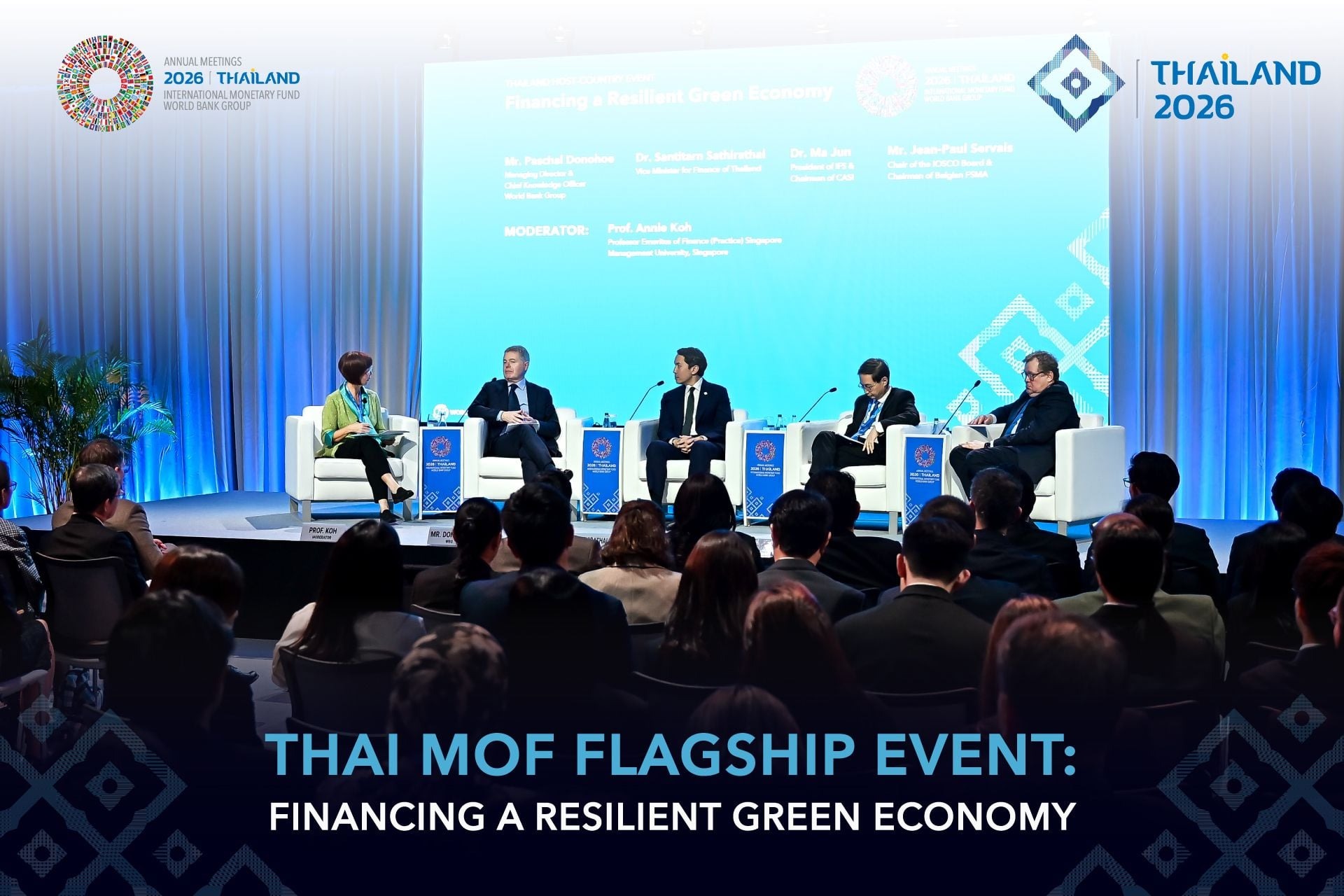
Thailand, for its part, is pitching AI, digital infrastructure, clean energy and electric vehicles, with the Finance Ministry estimating delegate spending alone could generate 1.05 to 2.25 billion baht. No confirmed investments have been announced yet; as one government spokesperson put it, the task is to turn attention into "lasting economic opportunities."
ASEAN on the Sidelines
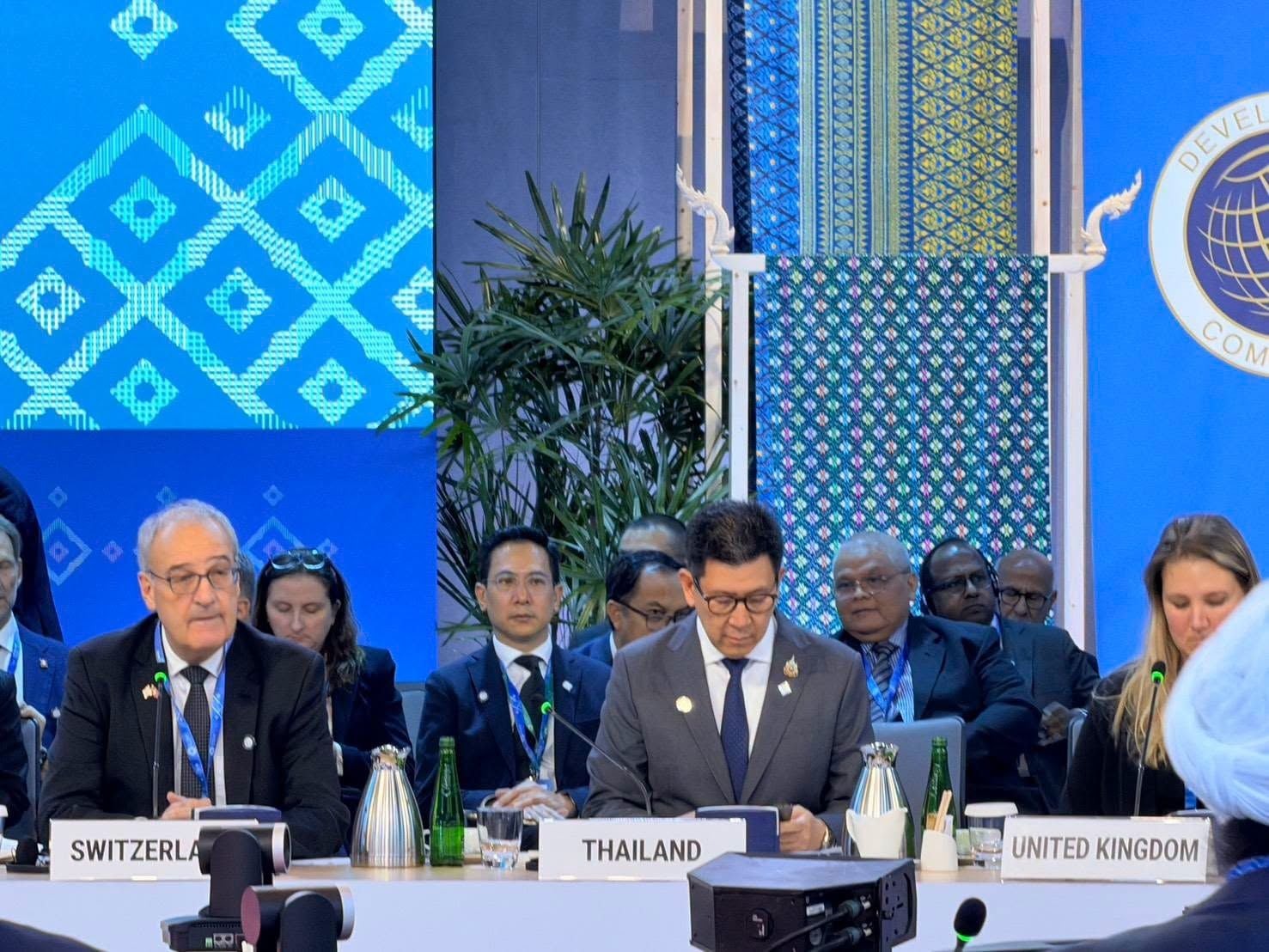
The week's principal ASEAN-specific event was the IMF's own high-level panel, "ASEAN in a Changing Global Landscape," held Wednesday morning, a deliberate piece of scheduling, since no ASEAN finance ministers' or central bank governors' negotiating meeting is convened in Bangkok this week.
The panel's lineup showed how the region now presents itself: Bangko Sentral ng Pilipinas Governor Eli Remolona Jr., carrying the voice of the 2026 ASEAN chair; Yasuto Watanabe of the ASEAN+3 Macroeconomic Research Office; Japan's vice-minister of finance for international affairs Atsushi Mimura; the Asian Development Bank's Scott Morris; and the IMF's Asia-Pacific director Krishna Srinivasan, with Georgieva herself and Nikkei Asia's John Aglionby moderating.
Around it, the sidelines filled out. CNN staged the Asia debut of its Global Perspectives forum at the Ritz-Carlton, invitation-only for 400 to 500 delegates, with Grab co-founder Anthony Tan, Trip.com's Jane Sun, Netflix's Malobika Banerji, OpenAI's Kiran Mani, Aliko Dangote and WTO chief Ngozi Okonjo-Iweala among the voices. The Rockefeller Foundation's AsiaXchange runs through Thursday with former Indonesian finance minister Sri Mulyani Indrawati and the U.K.'s Ed Miliband among its headliners.
What comes next is calendared: the Development Committee met Thursday, the Plenary on Friday, with Thailand's full pitch to follow, and the ministerial committee on Saturday. The meetings close Oct. 18. LIKE Leaders' full coverage continues through the close.

"The test of our progress is not whether we add more to the abundance of those who have much; it is whether we provide enough for those who have too little." Franklin D. Roosevelt, Second Inaugural Address, 1937