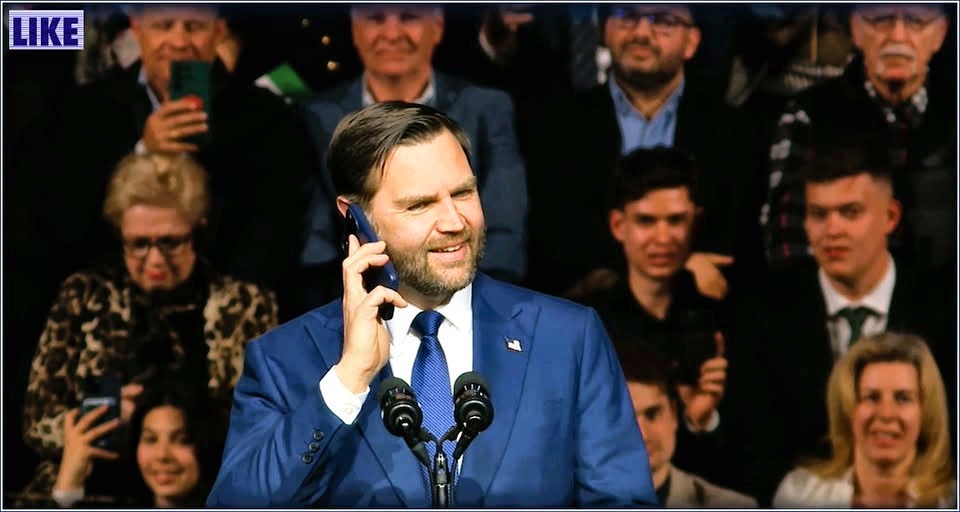
U.S. VICE PRESIDENT JD VANCE, PRESIDENT DONALD TRUMP, AND HUNGARIAN PRIME MINISTER VICTOR ORBÁN PITCH POLITICAL COMMON SENSE IN BUDAPEST, AS HUNGARY HEADS TOWARD A CRUCIAL ELECTION
“It is common sense to take a method and try it. If it fails, admit it frankly and try another. But above all, try something.” --Franklin D. Roosevelt
“Common sense” is a phrase used everywhere today. This article explores what it means, how it differs across perspectives, and why it resonates in politics.
What Common Sense Is Sigmund Freud described common sense as part of the ego—the mind’s practical, reality-oriented side that helps us act effectively and restrain impulse. For Freud, religion reflected a psychological response to fear and helplessness, while rational testing of reality represented mature thought. In this way, “common sense” meant viewing the world soberly through reason rather than wishful belief.
Psychology treats common sense as folk psychology: the everyday intuitions people use to explain behavior and emotion. These quick, experience-based judgments are often useful but—not unlike shortcuts—can also be biased or incomplete.
Scientific research shows that common sense, though reliable in daily life, often fails under careful testing. Psychology depends on data and replication to check these intuitive assumptions, while neuroscience finds that commonsense words like “thought” or “emotion” rarely map neatly onto specific brain systems.
Why Common Sense Varies Common sense depends on personal experience, education, and culture. What feels “obvious” in one community may seem untrue in another. Cultures shape beliefs about what options or viewpoints count as realistic or acceptable—what each society calls “normal.”
In short: Individual common sense draws from habit and memory. Cultural common sense comes from shared norms and language. Scientific explanation relies on evidence and testing.
A simple example: “People always act in their own self-interest.” That may sound reasonable, but psychology shows people also act from empathy, loyalty, fear, or duty. Common sense captures what seems true fast—but not always what is true.
Common Sense in Budapest Against this backdrop, “common sense” has become a political motif. When U.S. Vice President JD Vance phoned President Donald J. Trump from the podium after Hungarian Prime Minister Viktor Orbán completed today's speech in Budapest, the event was framed around shared practical vision: commerce, stability, and national sovereignty.
The gathering served both as a show of unity and as support for Orbán’s reelection campaign. His allies portray Hungary’s path as one of realism and continuity—“common sense” governance over ideological upheaval.
Orbán’s appeal seeks to reassure voters that steady leadership protects the country’s economic order and national identity. For his international partners, the message connects Hungary’s stability to a broader conservative movement emphasizing pragmatism and sovereignty.
As Hungary approaches its parliamentary election, the central argument has become clear: choose the leader who embodies common sense—a familiar yet deeply contested idea shaping both personal judgment and global politics.
(LIKE®Magazine, April 7, 2026) [Listen: STRFKR – “Budapest (feat. Shy Boys)” {Official Audio}: https://m.youtube.com/watch?v=GnAcF_pWfxk ]