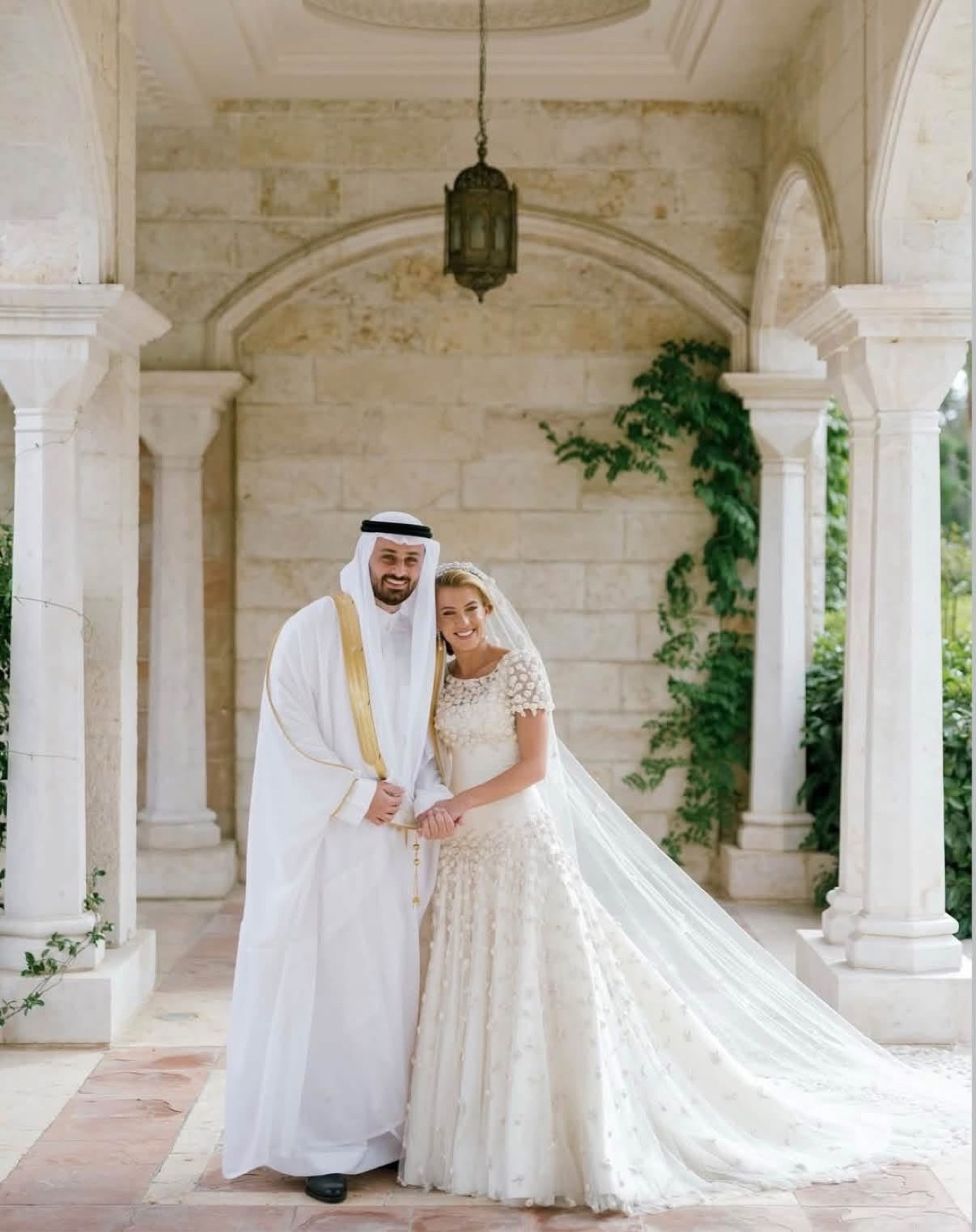
A celebration of elegance, heritage, and timeless beauty in Amman.
AMMAN, Jordan — There are palaces built for spectacle, and there are palaces that hold a family’s memory. Zahran Palace is the second kind. On Wednesday, September 30, 2026, in the presence of His Majesty King Abdullah II and Her Majesty Queen Rania, Her Royal Highness Princess Sara bint Faisal signed her marriage contract with Ali Murabet Al Sawaf in the stone halls of the palace where Jordan’s kings have married for 65 years — and where her own twin sister signed hers just last year.
The ceremony was a katb al-kitab, the traditional Islamic marriage contract: verses from the Quran were read, and the princess, seated beside her groom, signed the contract herself. The Royal Hashemite Court, in its official statement, named the King and Queen at the head of a small family gathering that included Prince Hashem bin Abdullah II, the King’s youngest son; the bride’s father, Prince Faisal bin Al Hussein; her grandmother, Princess Muna Al Hussein; and her mother, Princess Alia Tabbaa. No foreign royals were reported among the guests. In a season of monumental royal weddings, this one was, by every account, intimate: a family, a palace, and a contract signed in the late-September light.
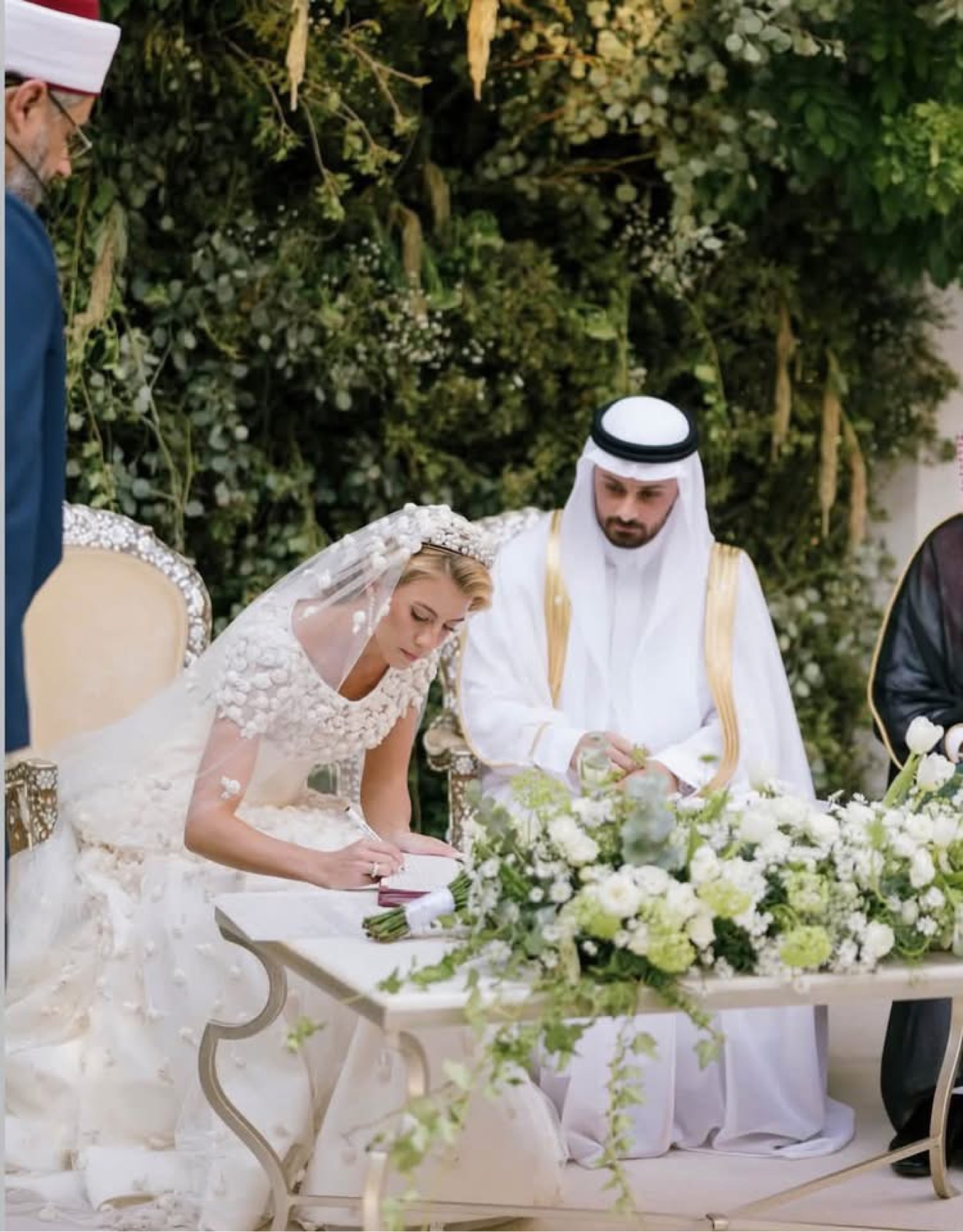
The bride
Princess Sara, 29, is the daughter of Prince Faisal, the King’s younger brother and the second son of the late King Hussein and Princess Muna, and of Princess Alia Tabbaa. She is the King’s niece and a first cousin of Crown Prince Hussein. Born in Amman on March 27, 1997, she was educated in the capital before taking a bachelor’s degree in interior architecture and a master’s degree in event organization and design at the University of Westminster in London — a fitting education, as it turned out, for a bride whose wedding would be praised for its design. She works as an assistant director of the Olympic Preparation Centre, helping to develop Jordan’s sports sector, a role the Royal Hashemite Court itself noted when it announced her engagement. Sport runs in the family: her father has chaired the Jordan Olympic Committee since 2003 and sits on the International Olympic Committee.
The princess is a twin. Her sister, Princess Aisha, married Karim Al Mufti at Zahran Palace on May 12, 2025. Seventeen months later, in the same rooms, it was Sara’s turn.
The groom
Ali Murabet Mohammed Al Sawaf, as the Court’s statement gives his full name, was born in Jeddah and educated at King’s Academy in Jordan — the school Crown Prince Hussein also attended — before reading computer science at King’s College in the United Kingdom. He works as an artificial-intelligence engineer, according to the coverage of the couple’s engagement. For the ceremony he wore traditional dress: a white thobe beneath a white bisht trimmed in gold, a white ghutra held by a black agal, and prayer beads in hand; in the signing photographs he appears among the men of the ceremony in the red-and-white checked keffiyeh that is Jordan’s national headdress.
The Royal Hashemite Court announced the couple’s engagement on January 18, 2025. It was marked in the Jordanian way, with a jaha, the formal ceremony at which the groom’s family asks for the bride’s hand, attended by the King, the Crown Prince, and Prince El Hassan bin Talal alongside Prince Faisal.
The dress, and a tiara passed hand to hand
The bride wore an A-line gown of ivory tulle designed by Bruce Oldfield, the London couturier, its layers hand-embroidered with thousands of tiny baby roses, according to Villa88’s report of the wedding and the vendor credits released with the official photographs. Roses climbed the bodice and the short sheer sleeves, spread across the skirt, and scattered over the long veil; a boat neckline and a cinched waist gave the dress its calm, classical line, and a long train followed her through the palace gardens. She carried white flowers and wore diamond earrings, each ending in a pearl.
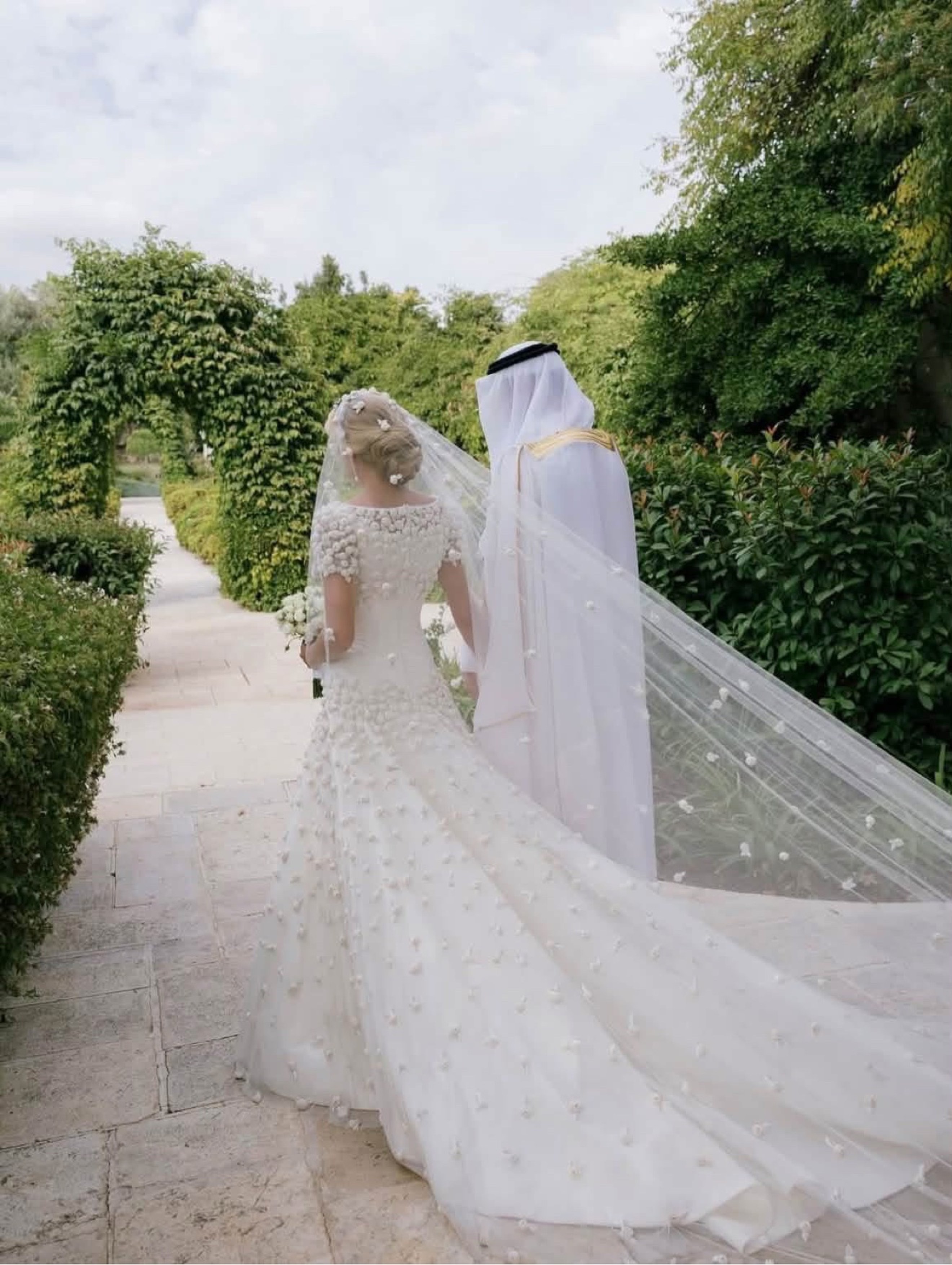
The choice of house carries its own history. It was Bruce Oldfield who designed the wedding dress Queen Rania wore at Zahran Palace in 1993, when she married the future King Abdullah II in the same gardens. Thirty-three years on, the same London house dressed the King’s niece for the same palace.
Her tiara told the family’s story even more directly. The Diamond Flower Tiara — diamond blossoms, each centered by a pearl — was given by Princess Alia to her eldest daughter, Princess Ayah, for her wedding in 2014. Princess Aisha wore it at Zahran in 2025. Now it crowned the third sister. One tiara, three brides, a mother’s gift passed hand to hand: heritage not as a theme but as a fact of the day.
Queen Rania, photographed beside the King in the family portraits, wore red — a draped Roksanda dress that gave the group photographs their single, striking note of color.
A palace of weddings
Zahran Palace, raised in 1957 on Zahran Street in Jabal Amman — the name means “blooming flower” — was the home of Queen Zein al-Sharaf, consort of King Talal and mother of King Hussein, until her death in 1994, and has served the court for ceremonies ever since. Its wedding register reads like the modern history of the Hashemite house: King Hussein exchanged vows with Princess Muna in its garden in 1961, and married Queen Noor there in 1978; the present King married Queen Rania there in 1993; Prince Hamzah celebrated his marriage there in 2004; and on June 1, 2023, Crown Prince Hussein signed his marriage contract with Rajwa Al Saif in a gazebo in its gardens before some 140 guests, with royalty flown in from around the world.
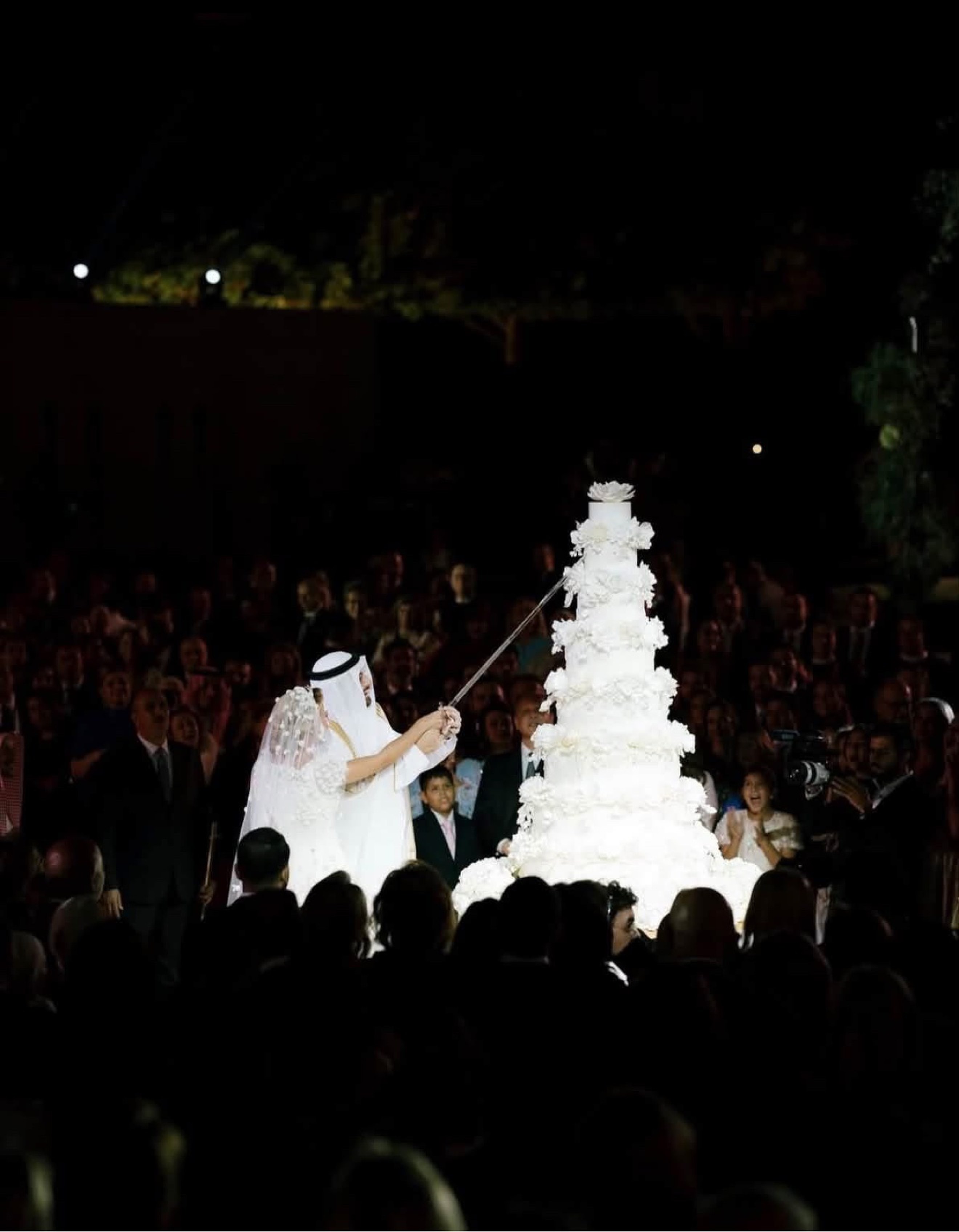
Princess Sara’s wedding was the quieter counterpart to that day: the same palace, the same garden colonnades, but family only. The bride arrived in a vintage dark-blue car, uniformed guards standing by in their red-checked keffiyehs, and the celebration that followed the signing ran into the evening — family and guests gathered around a towering multi-tiered cake, cut, in the photographs that have since charmed the region, with a sword.
“The Royal Hashemite Court congratulates Her Royal Highness Princess Sara bint Faisal and Ali Al Sawaf on this occasion,” the Court’s statement concluded, “and wishes them a life full of happiness and bliss.” Queen Rania marked the day on her official Instagram, posting photographs — among them one of herself with the King — and writing: “With His Majesty at the marriage contract of Princess Sara bint Faisal bin Al Hussein to Mr. Ali Al Sawaf, today at Zahran Palace. Congratulations to the couple; may God unite you in goodness and affection.” The palace of the blooming flower had added one more wedding to its register — an intimate one, and all the more elegant for it.