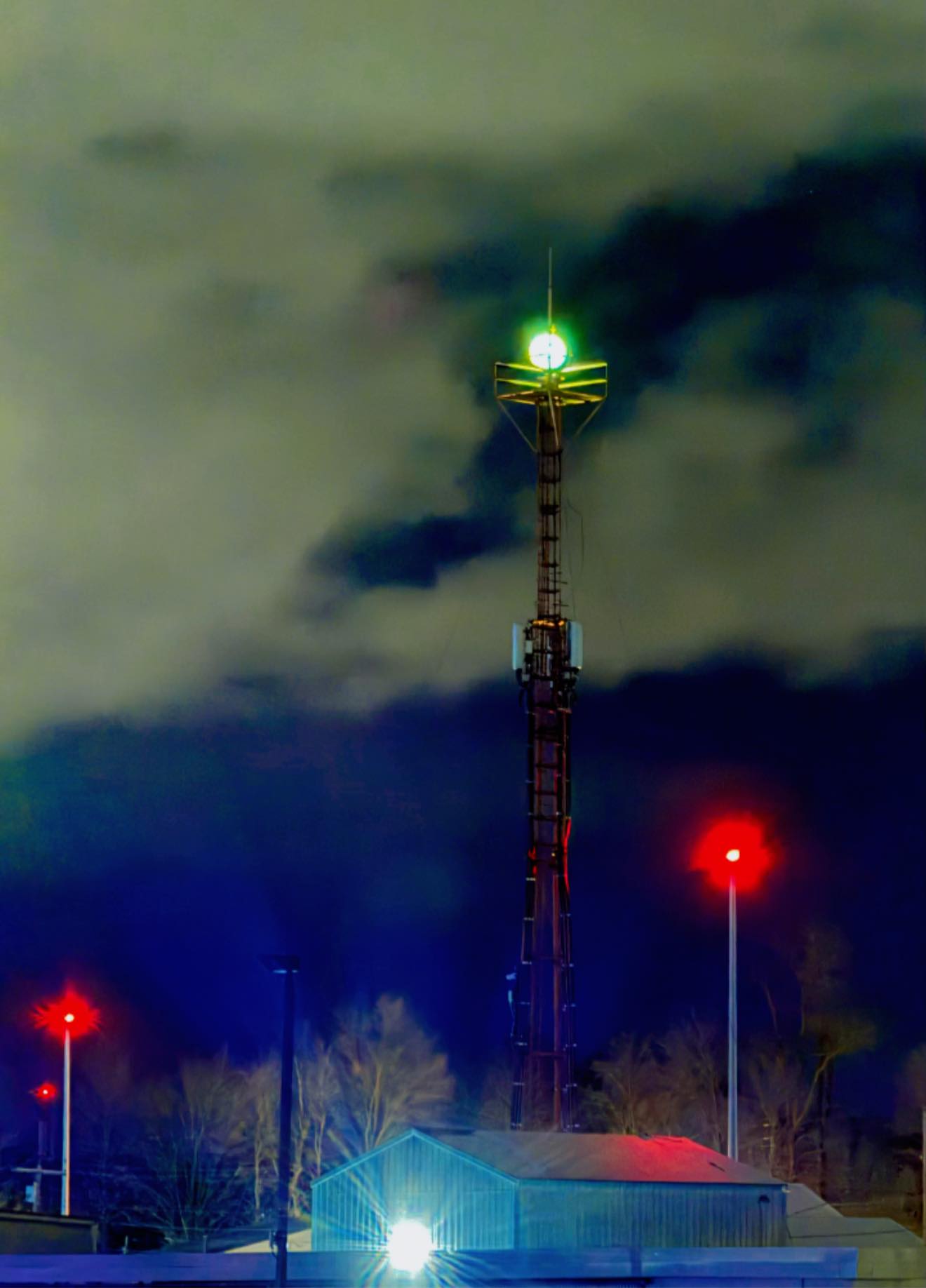
Rotating airport spotlights have a long history tied to aviation safety and navigation. Bonfires were the first earliest form of light used for navigation in both aviation and maritime contexts due to their simplicity and visibility.
In aviation, Lieutenant Donald L. Bruner pioneered the use of bonfires in 1919 to guide U.S. Air Mail pilots during nighttime flights, addressing the challenges of navigating in darkness without modern instruments. These bonfires were first tested during a 1921 flight, where they successfully illuminated the route for pilot Jack Knight. This method later evolved into a network of electric airway beacons by 1923, which were placed on towers and became essential for night navigation until radar and radio systems rendered them obsolete by the 1940s.
In maritime history, bonfires were similarly used as early navigation aids, lit on hillsides or platforms to guide ships into ports safely. Over time, these evolved into lighthouses with more advanced lighting technologies. Both applications highlight how bonfires served as foundational tools for navigation before technological advancements replaced them.
The origin of the bonfire traces back to ancient practices and etymology. The word "bonfire" stems from Middle English banefire, meaning a fire made of bones. These fires were historically used in rituals, such as Celtic midsummer festivals, where animal bones were burned to ward off evil spirits or honor deities like the sun.
With the spread of Christianity, bonfires became associated with religious celebrations, particularly Saint John's Eve, where they symbolized purification and community gatherings.
Over time, the term evolved to describe large outdoor fires used for celebrations or practical purposes, such as waste disposal or navigation.
By 1923, electric airway beacons replaced bonfires for air traffic control. These early beacons consisted of a white rotating searchlight with a 500-1,000-watt lamp and a mirror, visible up to 40 miles in clear weather. They were designed to help pilots locate airfields and navigate safely.
The primary purpose of these beacons is to guide pilots during nighttime or poor visibility conditions. They often use color codes (e.g., green for emergency landing areas) to convey specific information.
Early beacons used incandescent bulbs, which later transitioned to LED technology for better efficiency, durability, and environmental benefits. Modern control systems now allow remote monitoring and automation of airport lighting.
Artistic Use For Rotating Spotlights Rotating lights have inspired art installations. Airports like Minneapolis-St. Paul International and Houston’s IAH have incorporated light-based art pieces into terminals, showcasing their aesthetic potential.
Comparison to Movie Spotlights Airport beacons are similar to theatrical spotlights in their ability to focus light on specific areas. However, they are optimized for long-distance visibility rather than dramatic effects.
Modern maritime navigation has largely replaced lighthouses with advanced technologies, including: Global Positioning System (GPS): Provides precise location, speed, and course data using satellites. Radar and Automatic Radar Plotting Aid (ARPA): Detects nearby vessels, obstacles, and landmasses to avoid collisions. Electronic Chart Display and Information System (ECDIS): A digital alternative to paper charts, integrating GPS, radar, and other tools for route planning and hazard detection. Automatic Identification System (AIS): Tracks and identifies ships in real-time using VHF radio waves.
LED technology has revolutionized navigational lighting by reducing energy consumption and maintenance costs. While still essential for navigation, rotating beacons are less prominent today due to advancements in GPS and other navigation systems.
Photographer: Michael de la Force, 2.17.25